
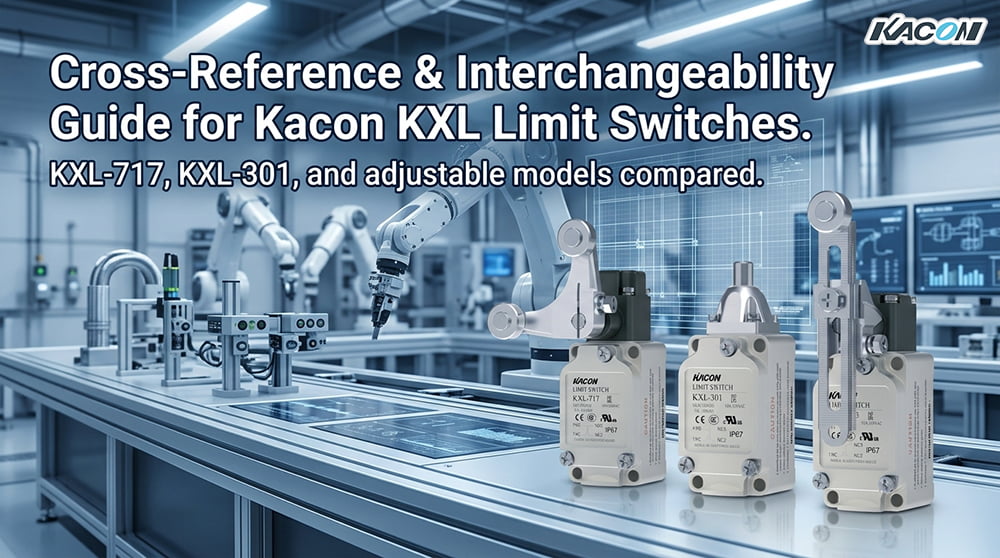
Executive Summary: Cross-referencing industrial limit switches allows OEMs, panel builders, and maintenance teams to identify high-quality alternative components like the Kacon KXL Series. However, a cross-reference is a functional comparison, not an automatic drop-in replacement. Engineering teams must rigorously verify mechanical, electrical, and environmental specifications before installation.
What Is a Limit Switch Cross-Reference?
A limit switch cross-reference maps an existing target application—or a legacy component—to a functionally comparable alternative model (such as the Kacon KXL Series) based on key parameters:
- Actuator mechanism (e.g., roller lever, push plunger, flexible rod)
- Electrical contact configuration (NO/NC pole arrangements)
- Mounting dimensions and conduit entry
- Environmental ingress protection (IP ratings and temperature tolerance)
4-Step Technical Verification Process
1. Start With Actuator Compatibility
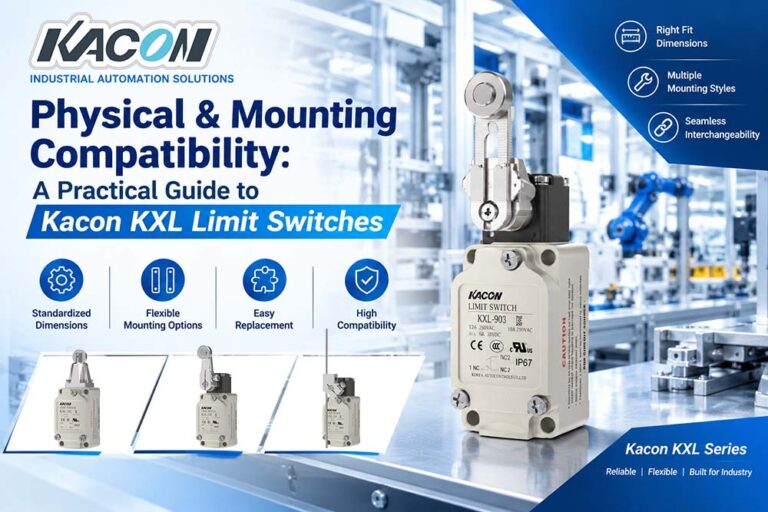
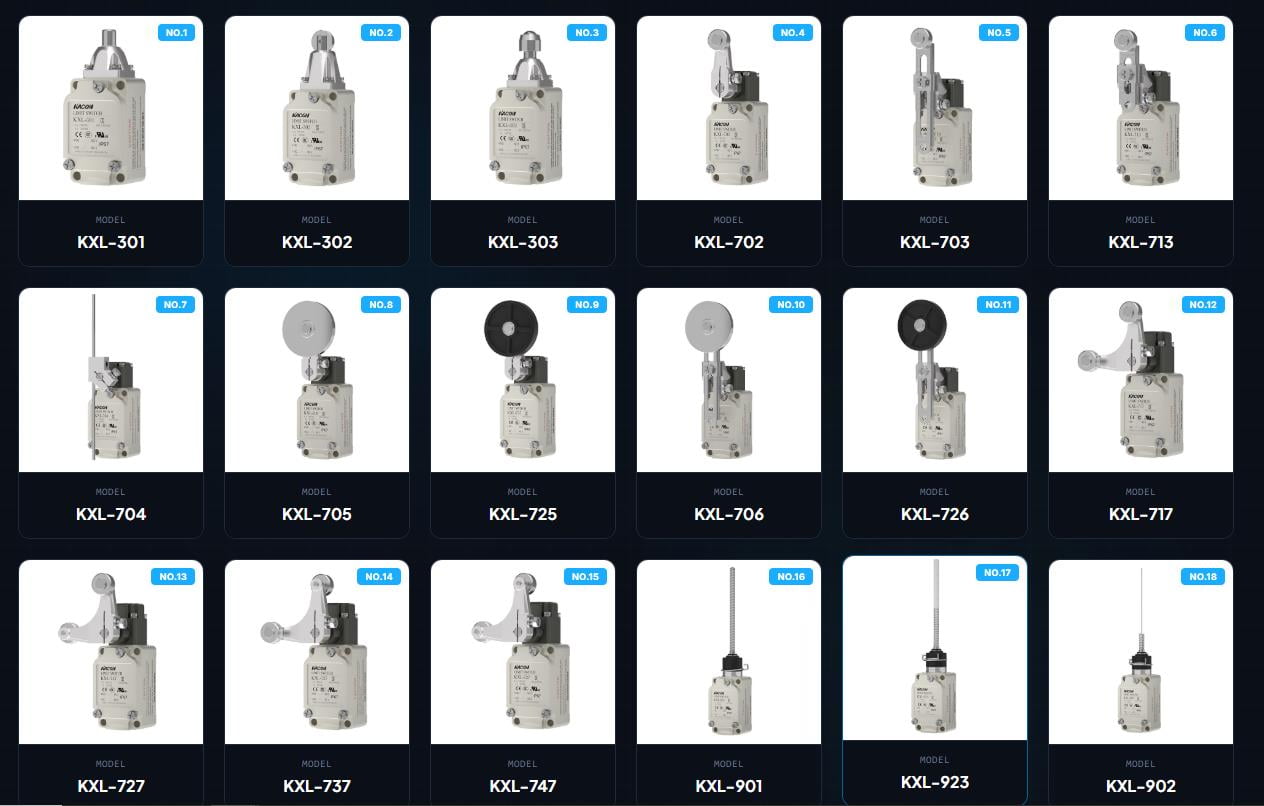
Actuator design governs physical interaction with machine cams or moving parts. Match push plungers with direct linear actuation, roller levers with rotary or side-actuation cams, and flexible spring-type actuators with multi-directional, low-force mechanical contacts.
2. Check Mechanical & Mounting Dimensions
Compare body dimensions, mounting hole centers, actuator orientation, and cable conduit threads (e.g., PG13.5, M20, or 1/2-14 NPT). Minor dimensional variances can impact machine clearance, operating point tolerances, or IP sealing integrity.
3. Perform Electrical Verification
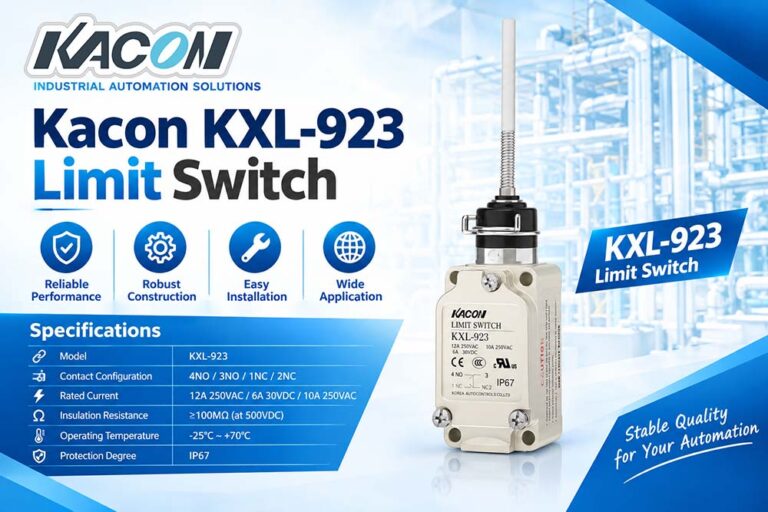
Verify the contact arrangement (SPDT, DPDT, 1NO/1NC), rated voltage ($U_e$), rated current ($I_e$), AC/DC load category (e.g., AC-15, DC-13), and short-circuit protection. A switch is not interchangeable simply because both units share the same contact quantity.
4. Evaluate Environmental & Safety Certifications
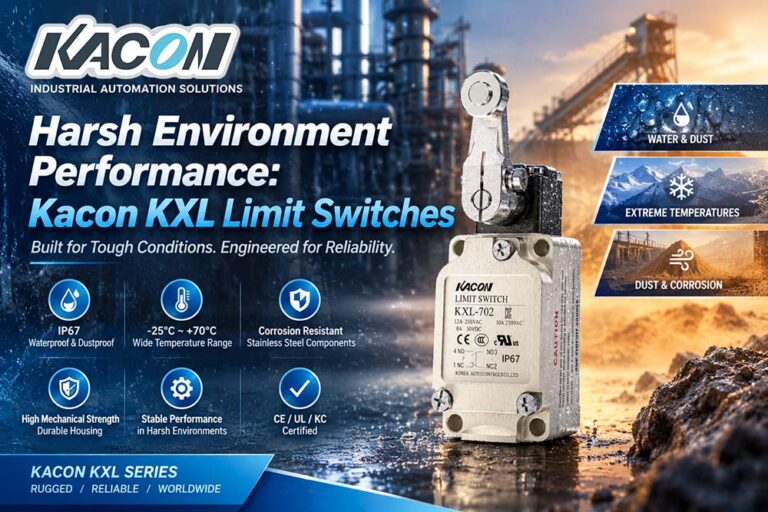
Ensure the alternative limit switch complies with international standards such as IEC 60947-5-1 for low-voltage switchgear and carries appropriate safety marks such as UL Certification or CE compliance for the target deployment region.
Building an Internal Qualified Cross-Reference List
To minimize downtime and streamline procurement, OEMs and plant maintenance departments should categorize alternative components into three clear operational tiers:
| Classification Category | Engineering Criteria & Description |
|---|---|
| Approved (Drop-in) | Validated on actual machinery. Mechanical dimensions, electrical ratings, and mounting match 100%. |
| Engineering Review | Promising candidate requiring physical trial, minor bracket adjustment, or electrical verification. |
| Not Recommended | Key specifications (load capability, actuation angle, IP enclosure rating) do not meet machine safety requirements. |
Quick Reference: 5-Stage Selection Workflow
| Stage | Cross-Reference Action Items |
|---|---|
| 1. Identify | Record original switch actuator style, mounting dimensions, cable entry, and electrical load data. |
| 2. Match | Search Kacon KXL Series catalog to locate models with comparable mechanical and electrical functions. |
| 3. Compare | Analyze technical CAD drawings, operating force/travel characteristics, and electrical spec sheets. |
| 4. Test | Install sample unit on actual target equipment to verify operational lifetime, clearance, and actuation reliability. |
| 5. Approve | Document the validated KXL model into the OEM approved vendor list (AVL) or bill of materials (BOM). |
Conclusion
The Kacon KXL Series offers robust, high-reliability options for cross-referencing legacy industrial limit switches. Following the systematic Identify → Match → Compare → Test → Approve process ensures seamless equipment operation, reduced supply chain risks, and maintained machine safety.
Further Reading & Reference Standards
To learn more about electromechanical switch standards and industrial automation best practices, refer to the following resources:
- International Electrotechnical Commission (IEC) – Standard IEC 60947-5-1 for Control Circuit Devices and Switching Elements.
- National Electrical Manufacturers Association (NEMA) – NEMA ICS 5 Standards for Industrial Control and Systems Direct Acting Switches.
- UL Solutions – Industrial Control Equipment Component Certification & Safety Testing Guidelines.
- Automation World – Industry Insights on Sensor Selection and Plant Equipment Maintenance.
- IEEE Xplore Technical Library – Engineering Research on Electromechanical Switch Reliability in Harsh Environments.