
When designing an automation system or replacing a limit switch, the external dimensions and actuator types often get all the attention. However, the internal “contact type” is what truly
dictates how your equipment behaves. Choosing the right configuration is the difference between a system that runs flawlessly and one that fails when you need it most.
To help you make the right choice, you can narrow down the perfect contact type by evaluating three key areas: Control Logic, Safety Requirements, and Circuit Design.
1. Selection Based on Control Logic Needs
The most fundamental step is deciding what you want the machine to do immediately after the limit switch is triggered.
● To Trigger an Action (Use NO): If your goal is to initiate a process when the switch is hit, choose a Normally Open (NO) contact. The circuit remains open (off) until the actuator is pressed, which closes the circuit and sends the signal.
● To Stop an Action (Use NC): If the switch needs to halt a moving part, choose a Normally Closed (NC) contact. The circuit stays closed (on) during normal operation. When the switch is triggered, the contacts separate, cutting the power or signal.
Control Logic Quick Reference
| System Goal | Required Action | Recommended Contact | Typical
Applications |
| Initiate | Close circuit upon trigger | Normally Open (NO) | Alarms, starting a process, indicator lights |
| Halt | Open circuit upon trigger | Normally Closed (NC) | Emergency stops, over-limit travel
protection |
2. Selection Based on Safety Level Requirements
The operating environment and the potential danger of the machinery strictly dictate your contact choice. Safety should always default to a “fail-safe” design.
- High-Safety Applications (Use NC): In hazardous environments involving heavy machinery like punch presses, stamping machines, or elevators, Normally Closed (NC)
contacts are mandatory. If a cable breaks, a wire vibrates loose, or power is lost, the NC circuit will immediately open. The controller interprets this broken circuit as a “stop” command, shutting down the equipment safely.
- General Signal Detection (Use NO): For low-risk applications, such as counting products on a conveyor belt or confirming a non-hazardous door is shut, Normally Open(NO) contacts are perfectly adequate and standard practice.

3. Selection Based on Circuit Design & Advanced Features
Features
Advanced electrical environments require you to think about wire integrity, high currents, and signal noise. This is where specialized switch features become critical.
Monitoring Line Integrity
For safety loops designed to verify that the wiring is perfectly intact, Normally Closed (NC) contacts are required. They maintain a continuous flow of current, meaning any interruption—whether from the switch triggering or a wire being cut—instantly alerts the system.
Protecting Against Contact Welding (The KACON Advantage)
In industrial settings, short circuits or unexpected high-current surges can physically melt and weld standard electrical contacts together. If an NC contact is welded shut, it cannot open to stop the machine, creating a massive safety hazard.
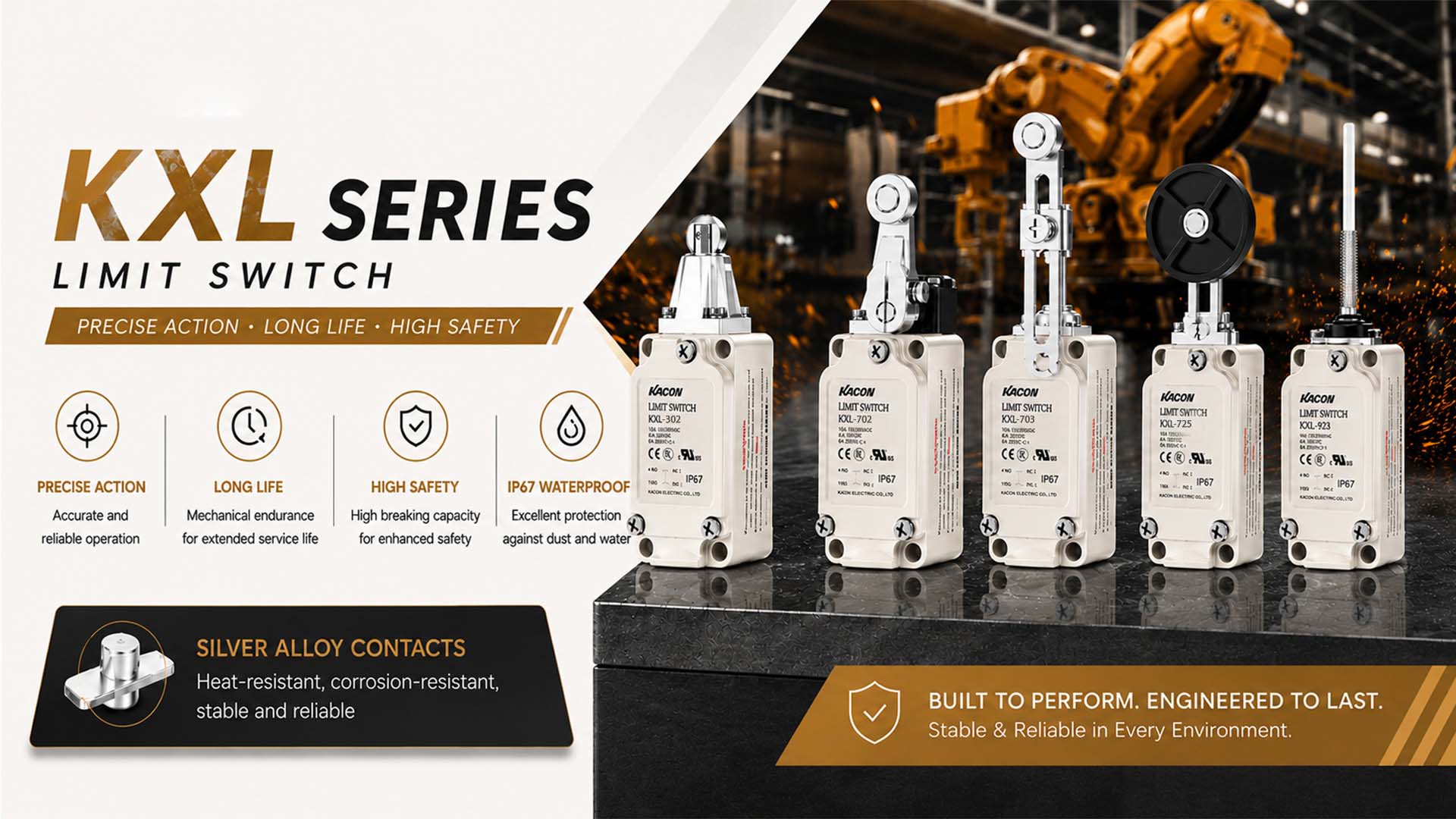
- The Solution: KACON limit switches feature a forced disconnection (positive opening) function. Even if a large current welds the contacts together, the mechanical force of the actuator physically breaks the weld apart, guaranteeing that the NC circuit opens to stop the machine.
Preventing Signal Interference
When transmitting low-voltage signals to a PLC, electrical noise and contact oxidation can cause dropped signals.
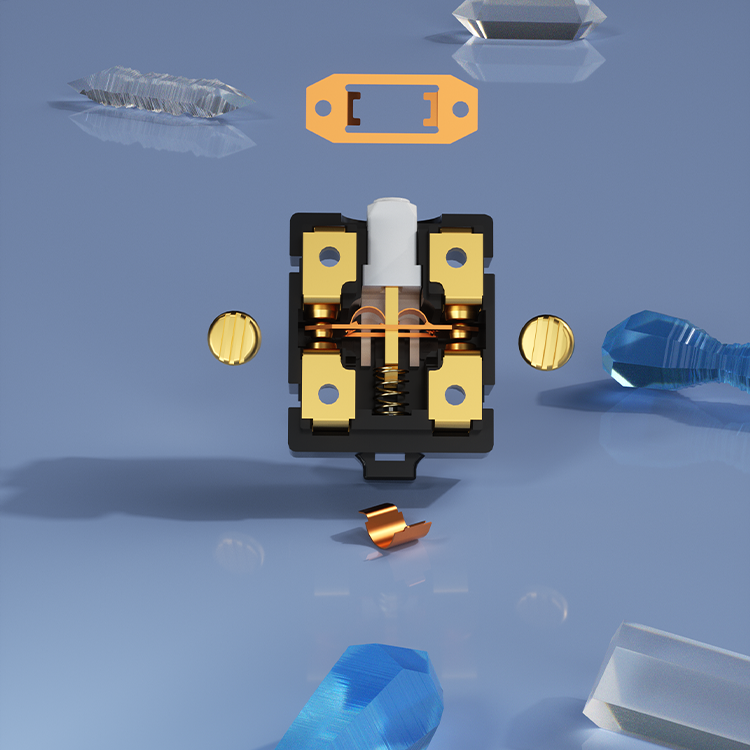
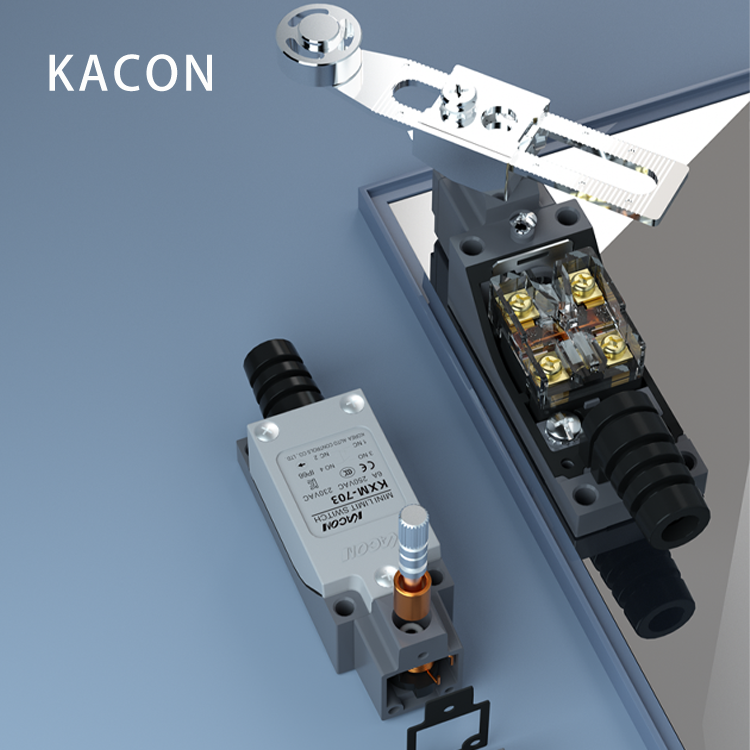
- The Solution: The KXM series limit switches are equipped with gold-plated contacts.
Gold provides exceptional resistance to oxidation and corrosion, ensuring highly stable performance and superior anti-interference capabilities over millions of cycles.
Which Contact Should You Choose?
| Evaluation Criteria | High Risk / Stop Commands | Low Risk / Start Commands | High Interference / PLC Logic |
| Contact Type | Normally Closed (NC) | Normally Open (NO) | NO or NC |
| Circuit Design | Positive Opening (Forced
Disconnect) |
Standard
Snap-Action |
Gold-Plated Contacts |
| Best Series Match | KACON with Forced
Disconnection |
Standard Series | KXM Series (Gold Contacts) |