
This naturally leads to a very common question: Does a limit switch have polarity?
The short answer is no. Traditional electromechanical limit switches do not have electrical polarity. However, understanding why they lack polarity—and when external factors like LED pilot lights or low-voltage control loads matter—is vital for proper control wiring.
Below, we examine this topic through a real-world client deployment case study, followed by an in-depth breakdown of limit switch electrical behavior, exceptions, and best wiring practices.
1. Real-World Client Case Study: Wiring AC vs. DC Control Loops
A prominent systems integrator in North America was recently tasked with retrofitting a legacy manufacturing plant’s material handling line. The project involved replacing old control panels and wiring dozens of new position switches across a mixed-voltage system.
The Integration Challenge
During the refit, a junior electrician hesitated while wiring a bank of limit switches on a 24V DC safety loop and an adjacent 120V AC conveyor gate. Concerned about reversing positive and negative lines, the technician paused, worried that wiring the wrong terminal would short out the switch or damage the internal contacts.
The Kacon Technical Resolution
The senior lead engineer clarified the fundamental rule: Electromechanical limit switches are purely mechanical switches with physical metal contacts. They do not care about positive or negative polarity.
- Universal Contact Operation: Whether you run 24V DC, 120V AC, or low-current instrumentation signals through the terminals, the internal mechanical bridge simply connects or disconnects the circuit.
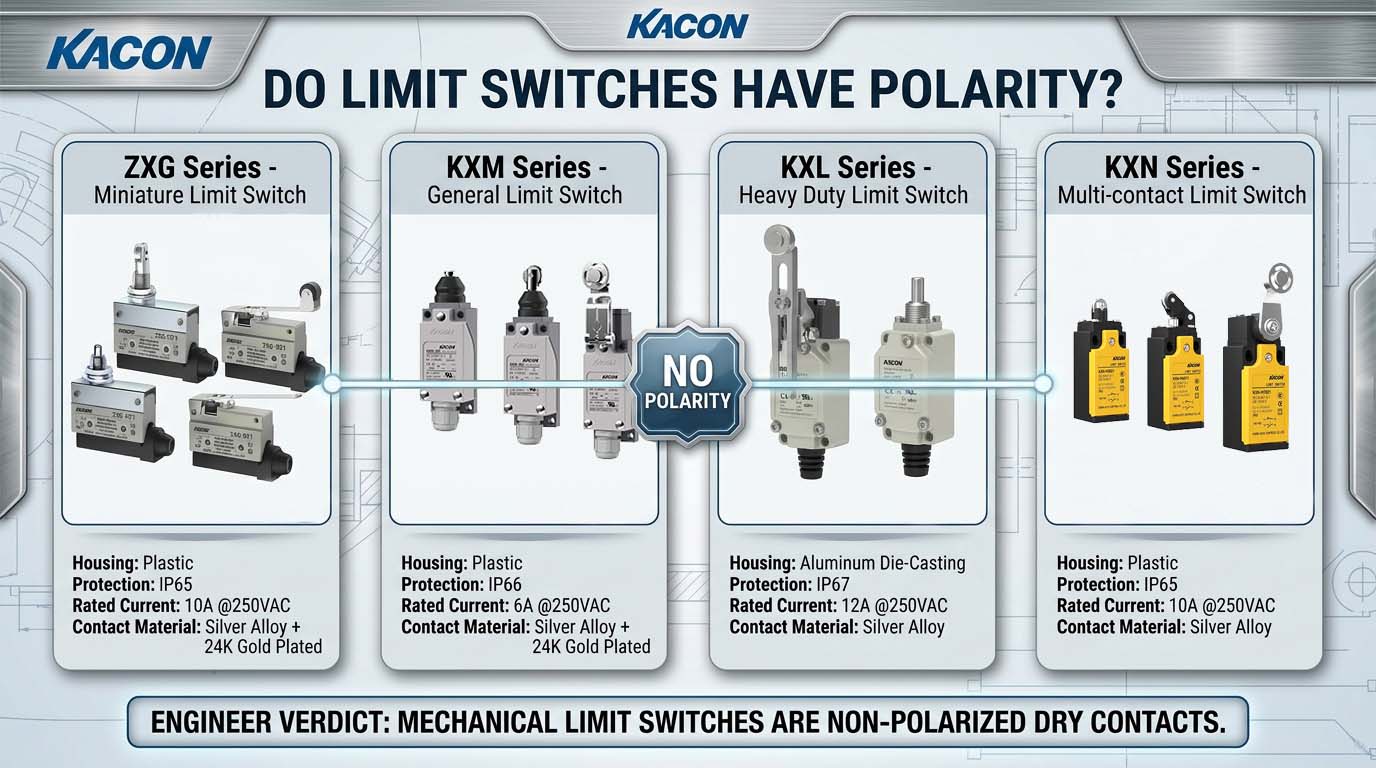
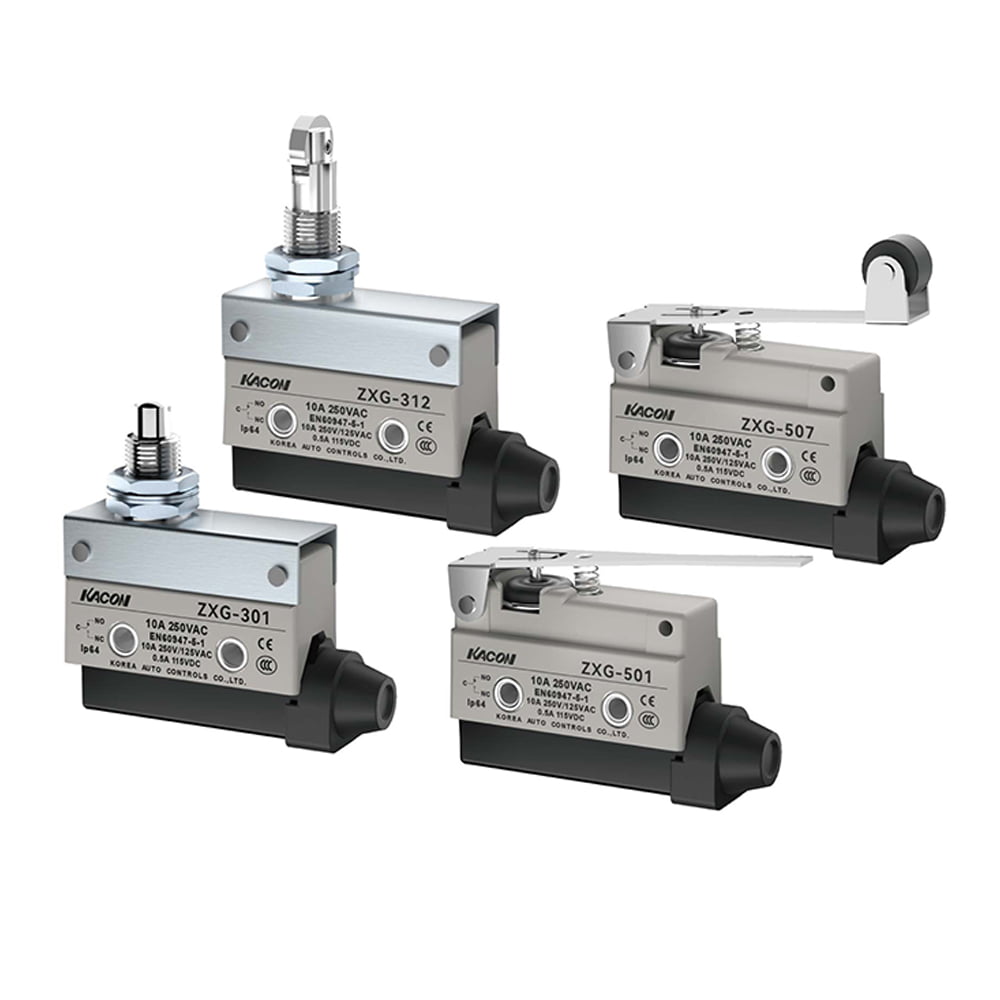
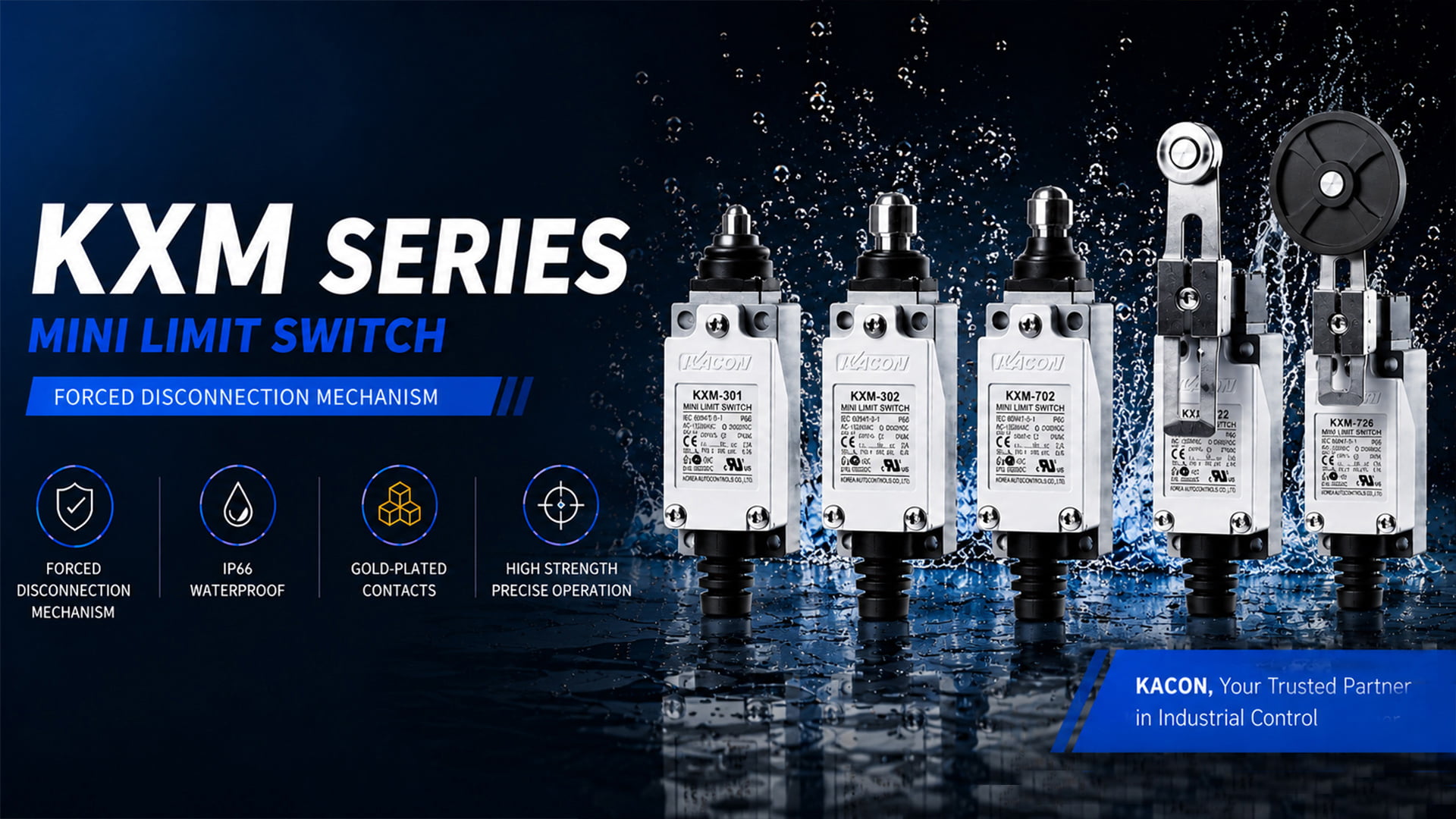
- Mixed-Voltage Reliability: To ensure absolute reliability across both AC and DC control loops, the facility deployed Kacon heavy-duty limit switches (such as the rugged KXL aluminum die-cast series and precision ZXG/KXM series). Featuring robust dual-circuit blocks (1NO + 1NC) and oxidation-proof 24K gold-plated contacts, these switches handled mixed-voltage switching effortlessly without signal degradation.
2. Why Electromechanical Limit Switches Lack Polarity
To understand why a limit switch has no polarity, you must look at how it functions internally:
- Mechanical Dry Contacts: A standard limit switch consists of moving metal blades (actuated by a spring and lever mechanism) that physically touch or separate from stationary metal terminals. There are no semiconductors, transistors, diodes, or microchips inside a standard electromechanical switch.
- Bidirectional Current Flow: Because it operates as a simple mechanical bridge, current flows in either direction through the terminal block (e.g., entering terminal 11 and exiting 12, or vice versa). Both AC (Alternating Current) and DC (Direct Current) pass through with identical physical results.
- No Polarity Terminals: Unlike electronic sensors, terminal screws on a limit switch are designated by functional contact numbers (such as 11/12 for NC and 13/14 for NO according to standard IEC Terminal Designation Guidelines) rather than positive (+) or negative (-) symbols.
3. The Exception: Illuminated Limit Switches
While standard limit switches have no polarity, there is one key exception to keep in mind: Illuminated limit switches.
Certain industrial limit switches incorporate a built-in LED or neon pilot light inside the housing to visually signal when the actuator is tripped:
- DC Illuminated Switches: If the internal LED indicator operates on DC voltage, the LED circuit board does possess polarity. Reversing positive and negative connections prevents the LED from illuminating (though the main mechanical contacts will still function normally).
- AC Illuminated Switches: AC-powered indicator lights process alternating current without polarity restrictions.
4. The Real Wiring Challenge: Low-Voltage Micro-Load Oxidation
While polarity isn’t an issue for electromechanical limit switches, contact resistance and surface oxidation represent major operational concerns in modern automated systems.
Modern Programmable Logic Controllers (PLCs) operate on low-voltage micro-loads (24V DC at under 10 mA).
- The Oxidation Problem: Standard silver contacts in generic switches rely on heavy arcing from high voltages to burn away microscopic surface oxidation. In low-current 24V loops, no arc is generated. Oxidation builds up, turning a “closed” circuit into a high-resistance barrier and triggering false safety interlock faults under standards like ISO 13849-1 Machine Safety Guidelines.
- The Kacon Solution: High-performance switches from Kacon (such as the ZXG and KXM series) integrate Ag alloy / 24K Au Plate (gold-plated) contacts. Because gold is a chemically inert noble metal, it completely resists oxidation, guaranteeing zero-resistance signal transmission regardless of voltage level or current direction. Testing procedures can be confirmed via Fluke Electrical Continuity Guides.
5. Quick Comparison: Limit Switches vs. Electronic Sensors
Use this reference table to compare electrical characteristics between electromechanical limit switches and solid-state sensors:
| Feature | Electromechanical Limit Switch | Electronic Proximity Sensor (NPN / PNP) |
|---|---|---|
| Electrical Polarity | None. Pure dry contacts; handles AC and DC equally. | Strict Polarity. Requires correct positive, negative, and signal wire orientation. |
| Internal Construction | Moving metal springs, actuators, and physical contacts. | Solid-state transistors, silicon chips, and internal logic circuitry. |
| Signal Type | Direct physical make-and-break dry contact switching loop. | Solid-state voltage switching (pulsed or steady-state). |
| Safety Enclosure Rating | Encapsulated in heavy-duty housings matching NEMA Enclosure Guidelines or IP67 standards. | Requires precise alignment; susceptible to EMI interference. |
| Kacon Advantage | Kacon KXL / ZXG Series: Heavy-duty housings, dual circuits (1NO+1NC), and 24K gold plating. | Standardized non-contact sensing configurations for high-speed detection. |
Conclusion: Simplicity Equals Reliability
Does a limit switch have polarity? No. Because they rely on purely mechanical, dry-contact switching, they are entirely indifferent to positive and negative orientations, making them exceptionally versatile for both AC and DC control loops.
By pairing this wiring simplicity with heavy-duty mechanical protection and oxidation-proof 24K gold-plated contacts from Kacon, control engineers can build robust, fault-free control systems that operate smoothly for millions of cycles.
External Technical References & Standards
For detailed standards and technical documentation on electromechanical switching, safety compliance, and circuit design, consult these authoritative industry resources:
- IEC International Electrotechnical Commission – Low-Voltage Switchgear Standards
- ISO 13849-1 Machine Safety Standards for Control Systems
- NEMA 250 Standards for Electrical Equipment Enclosures
- IEEE Xplore Digital Library – Electrical Circuit Engineering Standards
- Fluke Technical Resource: Testing Electrical Continuity with Multimeters