
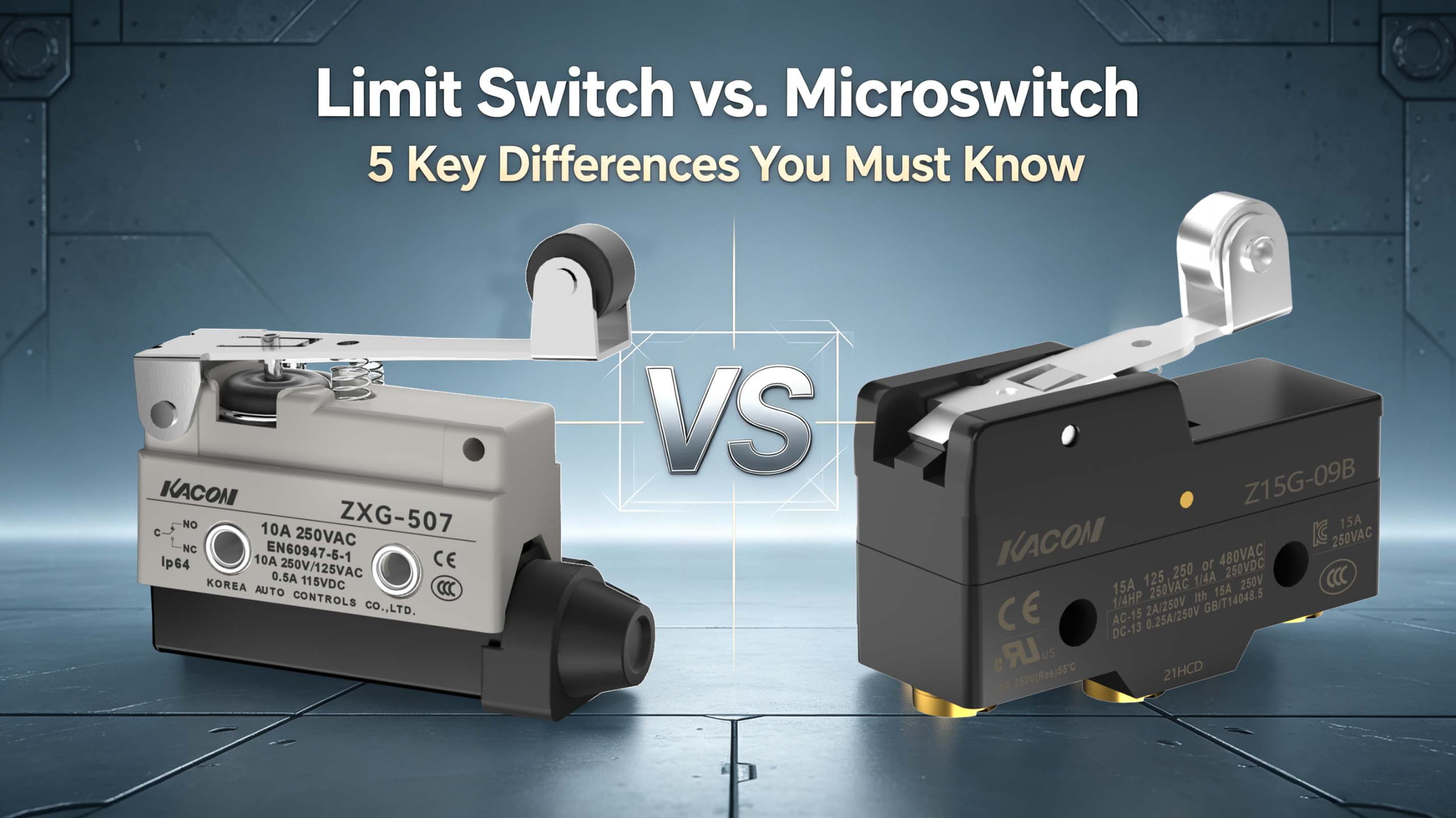
Whether you are designing a precise medical device or a rugged conveyor system, this guide will break down the differences between these two essential components. To explore deeper technical insights, browse our comprehensive guide on industrial switch fundamentals and basics.
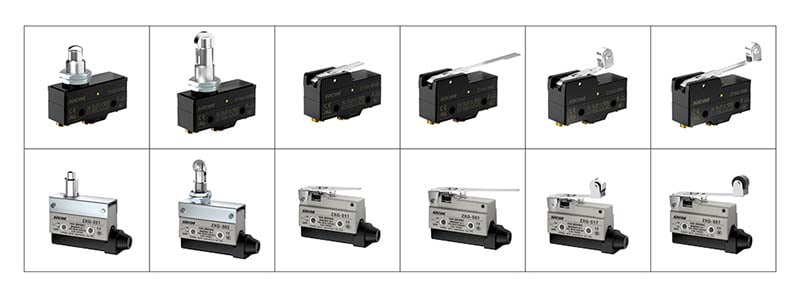
What is an Industrial Limit Switch?
A limit switch is an electromechanical device designed to detect the presence, absence, or physical travel limits of an object in industrial machinery. It typically consists of a robust actuator mechanically linked to a set of electrical contacts. When an object makes contact with the actuator, the device operates the contacts to make or break an electrical connection.
Limit switches are specifically engineered for heavy-duty, high-impact environments. To evaluate physical dimensions and mounting specifications, you can download the engineering blueprints on our industrial limit switches product catalog.
Key Characteristics of Limit Switches:
- Rugged Enclosure: Built with heavy metals (such as zinc alloy) or high-strength thermoplastics to withstand physical abuse.
- Superior Ingress Protection: Engineered with high IP ratings to seal out oil, water, dust, and aggressive industrial coolants.
- High Actuation Force: Requires significant physical force from heavy machinery or components to trigger the contacts.
What is a Precision Microswitch?
A microswitch is a small, highly sensitive switch that operates with minimal physical force and rapid transition speed. It utilizes a spring-loaded cantilever mechanism (known as a “snap-action” mechanism) to flip the contacts back and forth almost instantaneously when a tiny threshold of movement is reached.
Microswitches are highly versatile and are found in everything from consumer household appliances to complex aerospace systems. If you need to verify footprints for compact layouts, you can browse our catalog of miniature microswitches and snap-action components.
Key Characteristics of Microswitches:
- Compact Form Factor: Small footprint, making them ideal for tight spaces and direct printed circuit board (PCB) mounting.
- High Precision and Speed: Delivers exceptional repeatability with minimal travel distance (often fractions of a millimeter).
- Low Actuation Force: Easily triggered by light pressure, subtle air currents, or delicate mechanical movements.
5 Key Differences: Limit Switch vs. Microswitch
To help you select the most reliable component for your engineering project, let’s analyze the five defining differences between limit switches and microswitches.
1. Housing Material & Environmental Durability
The most obvious difference lies in the environmental conditions these switches can survive.
- Limit Switches are built like tanks. They feature robust, thick outer casings designed to withstand physical impacts, extreme vibrations, and harsh chemical washdowns. They typically carry high IP ratings (such as IP65, IP67, or IP69K), making them completely dust-tight and waterproof. For details on rigorous testing, check out our IP ratings technical guide for industrial enclosures.
- Microswitches usually feature basic plastic housings (like phenolic or thermoplastic resin). While sealed variations exist, standard microswitches have lower IP ratings and are intended to be housed inside protective outer enclosures (such as a control box or appliance chassis).
2. Actuation Force and Travel Distance
The mechanical input required to trigger each switch varies significantly:
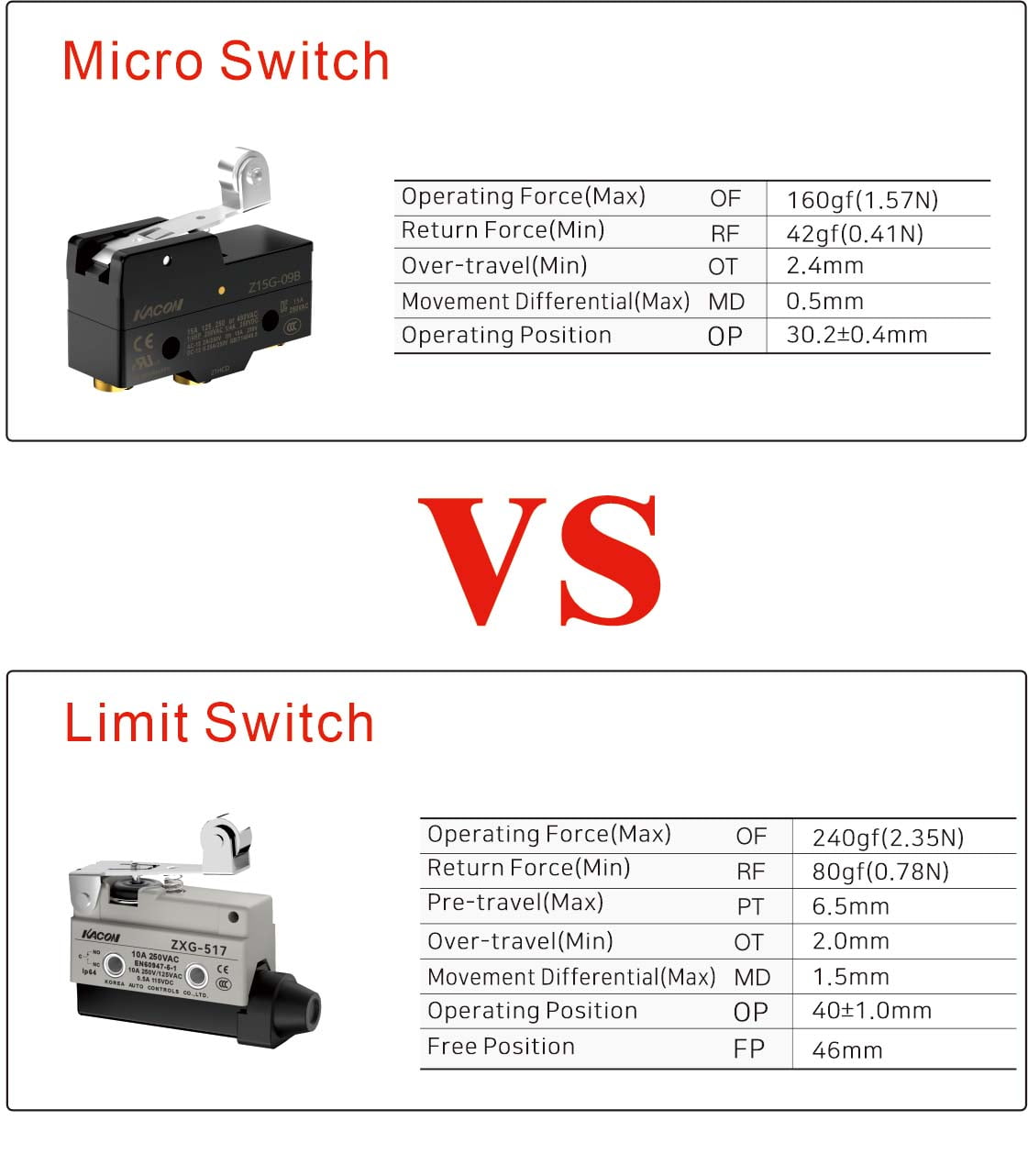
- Limit Switches require a relatively high actuation force and feature a long pre-travel and over-travel distance. This mechanical buffer prevents accidental triggering from minor vibrations or light debris on a factory floor.
- Microswitches operate on the snap-action principle. They require micro-movements and incredibly light physical force to flip the contacts instantly, ensuring precise timing and rapid cycle rates.
3. Electrical Ratings and Load Capacity
Because they serve different levels of an electrical system, their power-handling capabilities are tuned differently:
- Limit Switches often handle high voltages and currents directly. They can be wired in series with motors, solenoids, or heavy-duty relays, regularly switching AC currents of 10A or higher.
- Microswitches are typically deployed in control circuits, logic gates, or low-voltage signal routing (such as 5V, 12V, or 24V DC). While some heavy-duty models handle mains AC, they generally support lower current loads. You can review our certified lab data by downloading our comparative electrical load capacity data sheet.
4. Actuator Variety and Mechanical Lifespan
How the physical interface interacts with moving machinery dictates the design:
- Limit Switches are compatible with a massive variety of heavy-duty external actuators: roller levers, adjustable rods, wobble sticks, and plunger heads, designed to interact with passing metal cams or heavy pallets.
- Microswitches feature simpler actuators like pin plungers, short hinge levers, or simulated roller levers, usually designed to be pressed by internal cams, buttons, or delicate levers. However, due to their light contact mass, microswitches boast an exceptional mechanical lifespan (often reaching 10 million to 20 million operations).
5. Primary Application Fields
Where do you find these components in action?
- Limit Switches: Heavy conveyor belts, CNC machines, overhead cranes, elevators, and high-speed packaging lines where heavy mechanical components move with high force.
- Microswitches: HVAC systems (air pressure detection), safety door interlocks (microwave ovens, washing machines), 3D printers (Z-axis endstops), medical devices, and computer mice. To see how these components are deployed across sectors, visit our industrial automation applications gallery.
Comparison Table: Quick Summary
Use this quick reference table to compare the core specifications of limit switches versus microswitches at a glance:
| Feature | Limit Switch | Microswitch |
|---|---|---|
| Size & Design | Large, ruggedized casing | Miniature, compact footprint |
| Environmental Protection | High (usually IP65/IP67/IP69K) | Low (requires outer protective casing) |
| Actuation Force | High mechanical force | Very low/sensitive force |
| Electrical Load | High (Direct motor/solenoid switching) | Low to Moderate (Control logic/PCB level) |
| Lifespan (Cycles) | High (1M – 5M cycles) | Extremely High (10M – 20M+ cycles) |
| Cost Comparison | Higher (due to robust housing & seals) | Lower (highly cost-effective) |
Choosing the Right Switch for Your Application
Selecting the ideal component boiled down to three main criteria: your operating environment, space limitations, and electrical loads.
If your switch will be exposed to grease, water, metal filings, or heavy mechanical impacts on a factory floor, a Limit Switch is your only reliable option to prevent catastrophic downtime.
However, if you are designing an internal control board, a compact consumer device, or a high-precision sensor array where space is limited and movement is minimal, a Microswitch is the perfect fit.
Looking for Reliable Industrial Switches?
At Kacon, we manufacture high-performance industrial automation components engineered for precision and extreme durability. From robust industrial limit switches to high-accuracy microswitches, our products are trusted by automation engineers globally.
If you have specific technical requirements or need a custom switch solution for your project, please visit our industrial products showcase to find the perfect component for your machinery.