
1. The Four Core Purposes of a Limit Switch
A limit switch is never installed without a specific, calculated purpose. In industrial automation, its operational roles generally fall into one of four primary categories:
- Presence and Absence Detection: The most fundamental purpose is confirming whether a workpiece or component is correctly positioned. For example, before an automated robotic arm begins a welding cycle, a limit switch confirms that the metal component is securely clamped in the fixture.
- Precision Positioning: Limit switches serve as precise physical reference points. When a conveyor belt moves a product down the assembly line, a limit switch trips at an exact location to signal the PLC: “The product is positioned; stop the drive motor and initiate the packaging routine.”
- Travel Limit and Overtravel Protection (Machine Safety): This application gives the device its name. The switch establishes the absolute physical boundary for moving machinery (such as overhead cranes, linear gantries, or CNC tool slides). If a component exceeds its normal travel path, it actuates the limit switch, which immediately cuts drive power to prevent catastrophic mechanical collisions.
- Safety Interlocking: Limit switches play an essential role in operator protection. Installed on perimeter fencing, access panels, or physical machine guards, opening a door during operation trips the switch and triggers an immediate safety shutdown, helping equipment satisfy regulatory requirements such as OSHA Machine Guarding Standards.
2. Hardware Purpose: Matching the Switch to the Task
Because the operational demands on a limit switch vary dramatically—from detecting lightweight packaging on a conveyor to halting heavy machinery—hardware must be tailored to the environmental and mechanical stress of the application.
Systems engineered for safety-critical overtravel protection often incorporate positive-opening mechanisms aligned with functional safety criteria like ISO 13849-1 Functional Safety Guidelines.
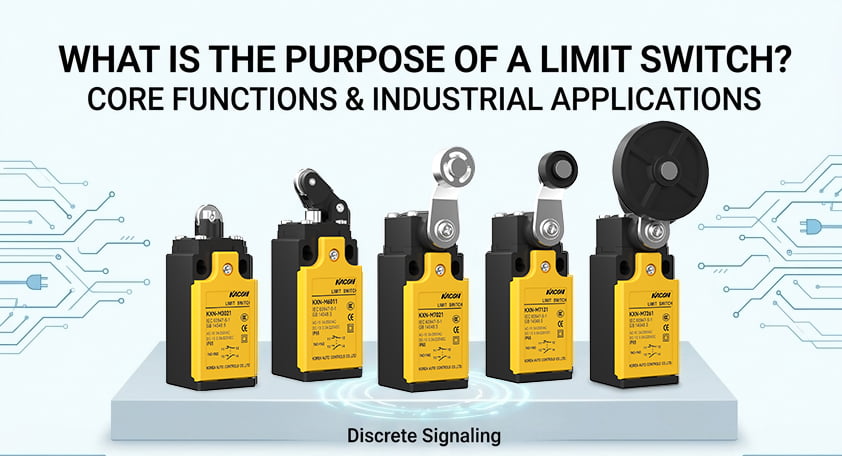
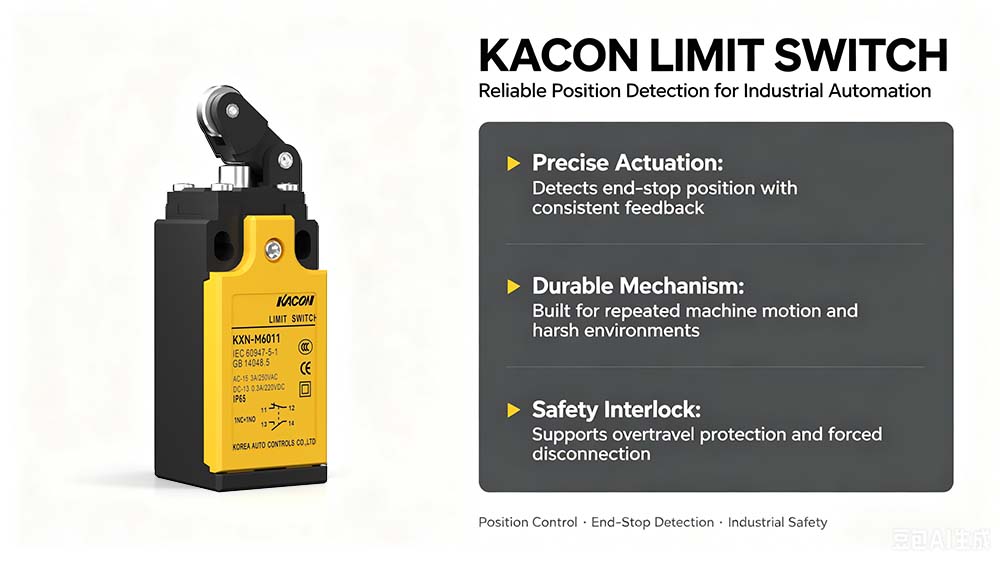
Below is a hardware selection breakdown highlighting how Kacon industrial limit switches fulfill specific operational purposes:
| Operational Purpose | Industry Example | Key Hardware Requirement | Recommended Kacon Solution |
|---|---|---|---|
| Precision Positioning & Micro-Signaling | Assembly line sequence triggering for 24V PLC inputs | High signal integrity at low currents; rapid contact response | ZXG / KXM Series (Features Ag alloy / 24K Au-plated gold contacts to prevent signal drop) |
| Heavy-Duty Overtravel Protection | End-of-travel stop for CNC machine tool carriages | High mechanical impact resistance; robust metal enclosure | KXL Series (Die-cast aluminum housing; 12A load capacity) |
| General Presence Detection | Part counting and sorting along conveyor lines | Extended mechanical life cycle; compact form factor | KXN Series (Polycarbonate IP65 housing; rated for 10,000,000 operations) |
| Extreme Environment Interlocking | Washdown zones in food processing & chemical processing | Complete water ingress protection; corrosion resistance | ELN Series (Heavy-duty sealed structure with IP68 submersion rating) |
3. The Purpose of Internal Contact Materials: Why Gold Contacts Matter
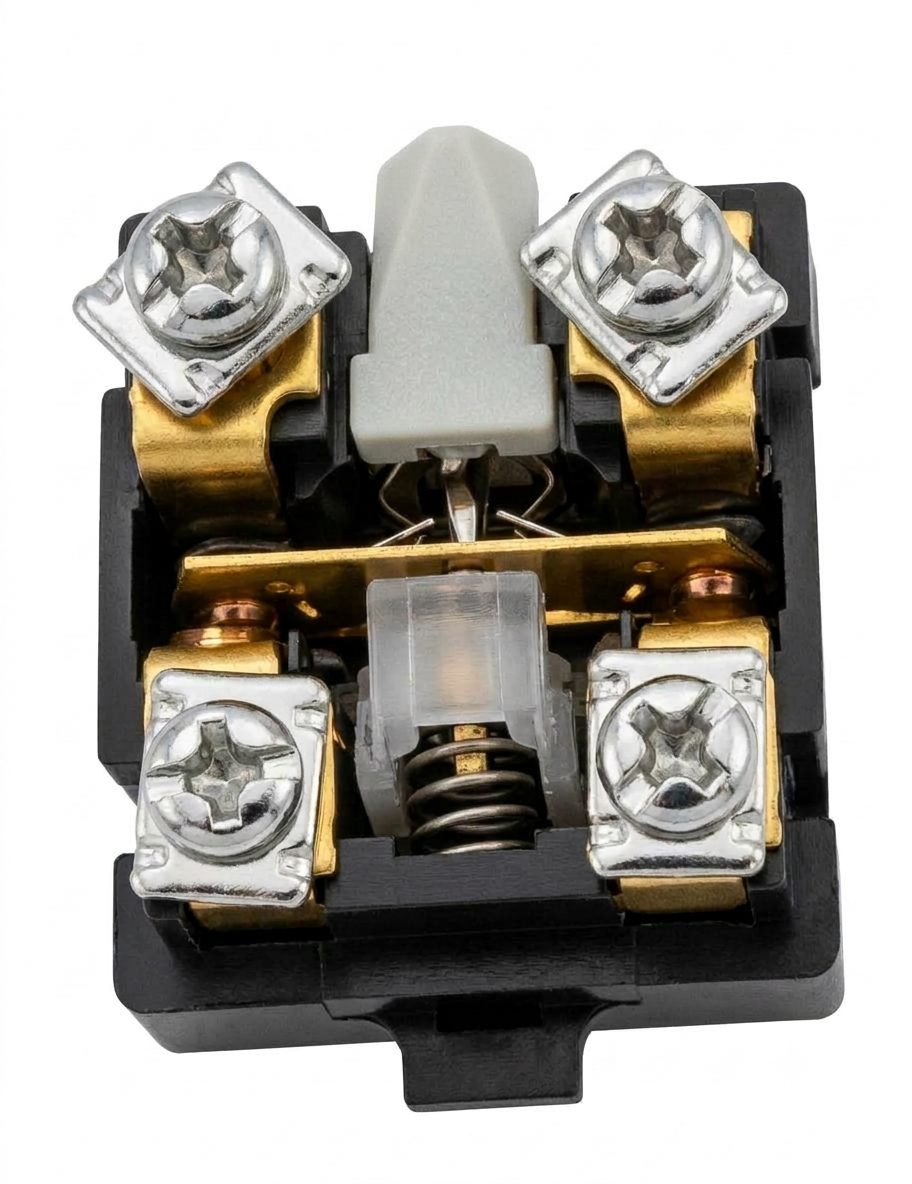
While the external actuator interacts with physical machine parts, the internal electrical contacts communicate directly with Programmable Logic Controllers (PLCs) or safety relays.
Modern PLCs process discrete inputs at extremely low currents and voltages (typically 24 VDC at <10 mA). Standard silver contacts rely on high-current electrical arcing to clear surface oxidation. Under low micro-load conditions, arcing does not occur. As a result, an insulating oxide film forms over silver contacts—causing the switch to click mechanically while failing electrically.
To ensure total signal reliability in compliance with electromechanical standards like IEC 60947-5-1 for Low-Voltage Control Devices, high-end automation switches—such as the Kacon ZXG and KXM series—utilize 24K gold-plated contacts. Gold resists oxidation and tarnish, delivering clean, bounce-free signaling over millions of operations.
4. The Purpose of the Enclosure: Environmental Defense
The switch enclosure protects internal contact blocks and mechanical return springs from harsh factory environments. Without proper sealing, fine metallic dust, cutting coolants, moisture, or oil can penetrate the body and cause internal short circuits.
Industrial switch housings are classified according to standardized ingress criteria, such as NEMA Enclosure Guidelines and the IEC Ingress Protection (IP) Code System.
Whether an application requires basic dust and splash protection (such as the IP65-rated KXN series) or heavy-duty oil and water submersion defense (such as the aluminum die-cast, IP67/IP68-rated KXL and ELN series), selecting an appropriate enclosure rating ensures reliable performance throughout the machine’s life cycle.
Conclusion: The Essential Feedback Link in Automation
The primary purpose of a limit switch is to bridge physical mechanical movement and electronic control logic. Whether detecting part presence, establishing travel limits, maintaining position reference, or enforcing safety interlocks, selecting a switch with application-matched enclosure ratings and oxidation-free gold contacts guarantees a safe, reliable, and efficient automation process.