
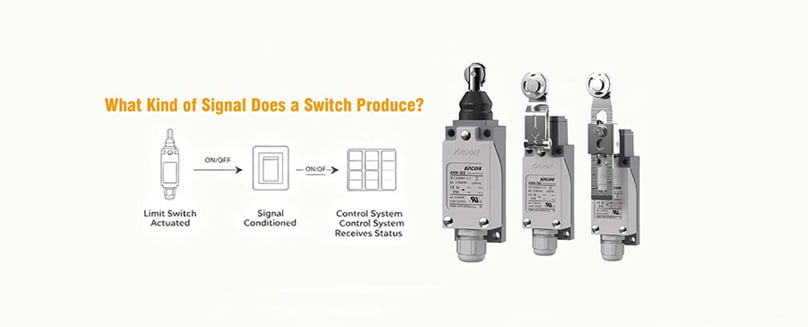
Let’s dive into the nature of these signals, how they interact with Programmable Logic Controllers (PLCs), and why internal hardware materials dictate signal reliability.
1. The Anatomy of a Discrete Signal (Digital / Binary)
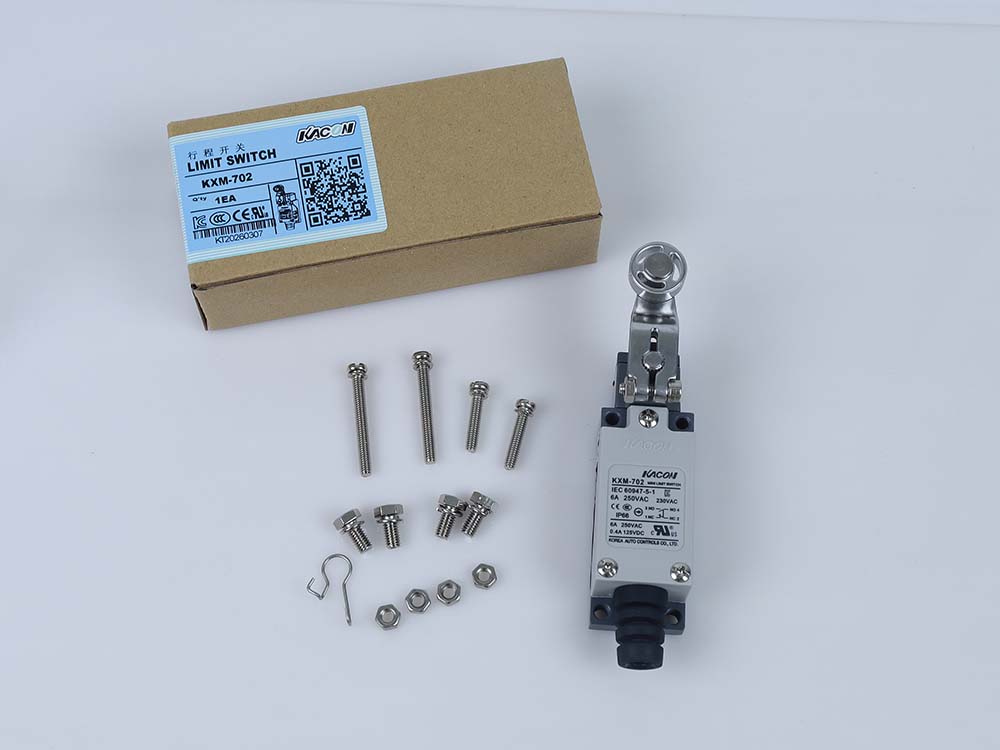
When an electromechanical switch is actuated—for example, a machine part physically hitting the roller lever of a limit switch—the internal mechanical contacts snap together or pull apart. This mechanical action translates into a highly reliable electrical state:
- Logical “1” (HIGH / Closed): The contacts are physically connected. Electrical current flows through the switch loop, and the PLC digital input module registers a voltage signal (typically 24V DC or 120V AC).
- Logical “0” (LOW / Open): The contacts are separated. The circuit is physically broken, no current flows, and the PLC reads 0V.
Because this signal relies on the physical bridging of two metal contacts (often called a “dry contact” before power is applied), it provides absolute determinism. There is no ambiguous middle ground or signal drift, which is why discrete signals are mandated for safety interlocks and emergency stop (E-Stop) safety circuits globally.
For comprehensive guidelines on discrete control architectures and switching devices, engineers refer to international standards such as IEC 60947-5-1 for Low-Voltage Control Switchgear.
2. Comparing Switch Signals vs. Sensor Signals
To better understand what kind of signal a switch produces, it helps to compare standard electromechanical limit switches with other common industrial sensors found in automated control loops.
Control systems must also adhere to functional safety requirements like ISO 13849-1 Machine Safety Guidelines when specifying discrete devices for safety-critical inputs.
Below is a comparison matrix detailing signal types, outputs, and ideal applications, featuring reliable industrial electromechanical options from Kacon:
| Device Type | Output Signal Type | Signal Characteristics | Typical Component / Technology | Primary Application |
|---|---|---|---|---|
| Electromechanical Limit Switch | Discrete (Digital / Binary) | Deterministic ON/OFF (1 or 0); extreme noise immunity (EMI); zero leakage current | Kacon KXL, ZXG, KXM Series (Physical Metal Contacts) | Overtravel protection, safety interlocks, end-of-travel position detection |
| Solid-State Proximity Sensor | Discrete (Digital) | ON/OFF logic using solid-state transistors (NPN/PNP); may exhibit minor leakage current | Inductive / Capacitive Coils & Transistors | High-speed non-contact part detection in clean processing environments |
| Ultrasonic / Laser Distance Sensor | Analog | Continuous varying signal proportional to distance (e.g., 4–20mA, 0–10V) | Piezoelectric / Optical Transmitters | Continuous liquid level monitoring or variable distance measurement |
| Rotary Encoder | Pulse Train (Digital) | High-speed sequential square-wave pulses indicating speed and relative position | Optical / Magnetic Disks | Motor speed feedback, servo indexing, and robotic joint positioning |
3. Signal Reliability: The Micro-Load Challenge
While the concept of a discrete ON/OFF signal is straightforward, generating a clean, reliable signal in modern automated factories presents specific electrical challenges.
Most modern PLCs operate on low power (micro-loads), typically drawing less than 10 mA at 24V DC for digital inputs. At these low current levels, standard silver-alloy contacts inside a switch do not generate enough energy or arcing to clear naturally occurring surface oxidation.
If an insulating oxide film forms over silver contacts, the physical switch may close mechanically, but the electrical circuit remains open due to microscopic tarnish. The PLC reads a “0” (OFF) signal even though the switch is physically actuated, causing unexplained machine faults or emergency stops.
The Hardware Solution: 24K Gold-Plated Contacts
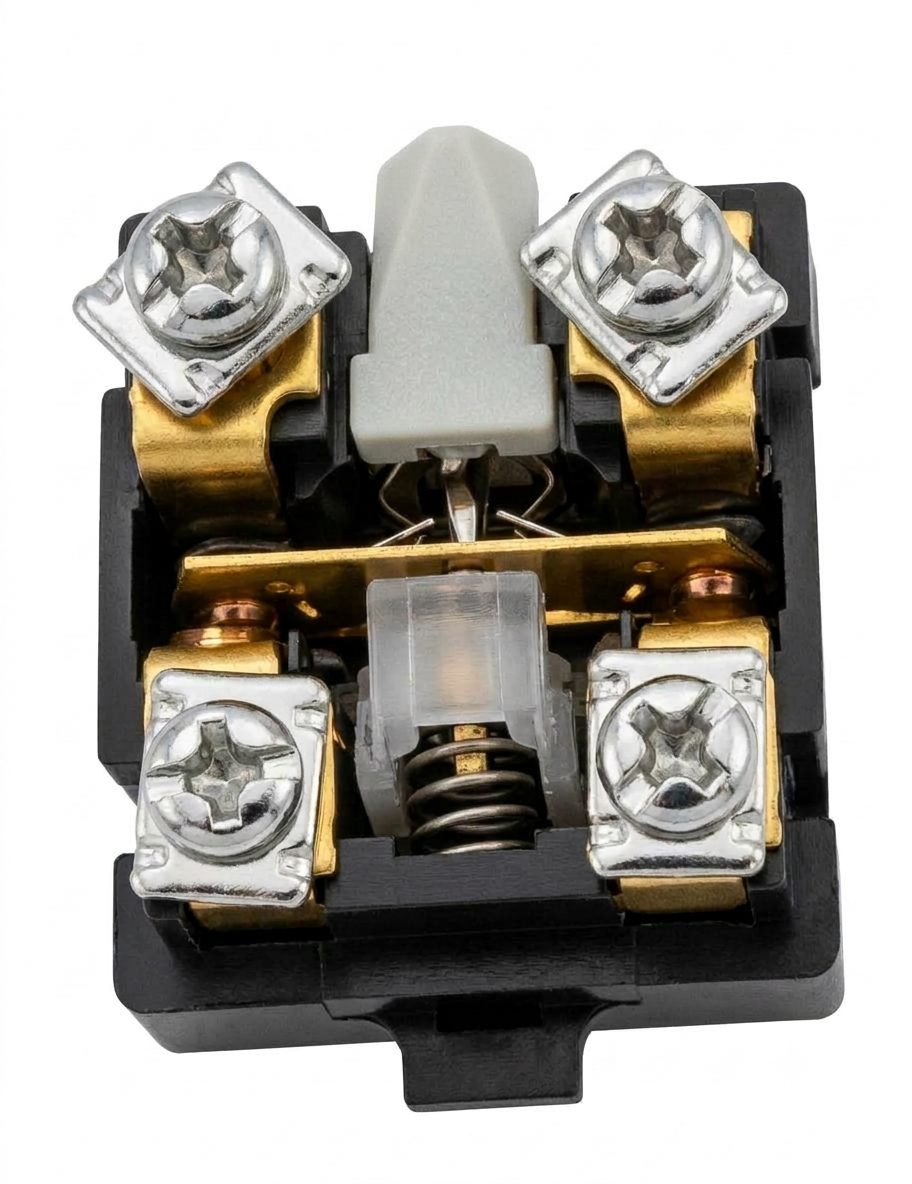
To ensure discrete signal transmission remains flawless under micro-load PLC conditions, high-precision industrial switches utilize non-reactive gold-plated contacts.
Switches such as the Kacon ZXG and KXM Series are engineered with Ag alloy / 24K Au-plated contacts. Gold resists chemical oxidation and tarnishing. This guarantees that when the switch actuates, a low-resistance electrical signal is immediately transmitted to the PLC without signal bounce or false fault triggers.
Proper electrical testing procedures, such as those governed by OSHA Electrical Safety Standards, recommend verifying contact continuity during routine preventive maintenance to prevent intermittent open-circuit faults.
4. Industrial Enclosures and Signal Protection
A discrete signal is only as reliable as the enclosure protecting the internal mechanism. Environmental ingress from water, cutting oil, or dust can bridge open contacts and produce false “ON” signals or short-circuit the control loop.
Heavy-duty switches designed for harsh washdown environments or high-dust areas are manufactured in accordance with NEMA Enclosure Ratings and the IEC Ingress Protection (IP) Code System.
Specifying IP67 or IP68 die-cast aluminum switches—such as the heavy-duty Kacon KXL Series—prevents fluid penetration, ensuring signal integrity across millions of operational cycles.
Conclusion: Simplicity Equals Safety
So, what kind of signal does a switch produce? A discrete, digital, ON/OFF signal. This deterministic binary communication remains the most robust and reliable mechanism to govern industrial machinery and protect operators.
By understanding the nature of these signals and choosing application-matched hardware—such as the rugged aluminum die-cast housings of the Kacon KXL Series or the oxidation-free gold contacts of the ZXG Series—automation engineers can build systems that operate reliably, cycle after cycle.