
1. Classification: An Electromechanical Position Sensor
At its core, a limit switch belongs to the family of electromechanical sensors. This means it bridges the mechanical and electrical domains through a physical actuator mechanism.
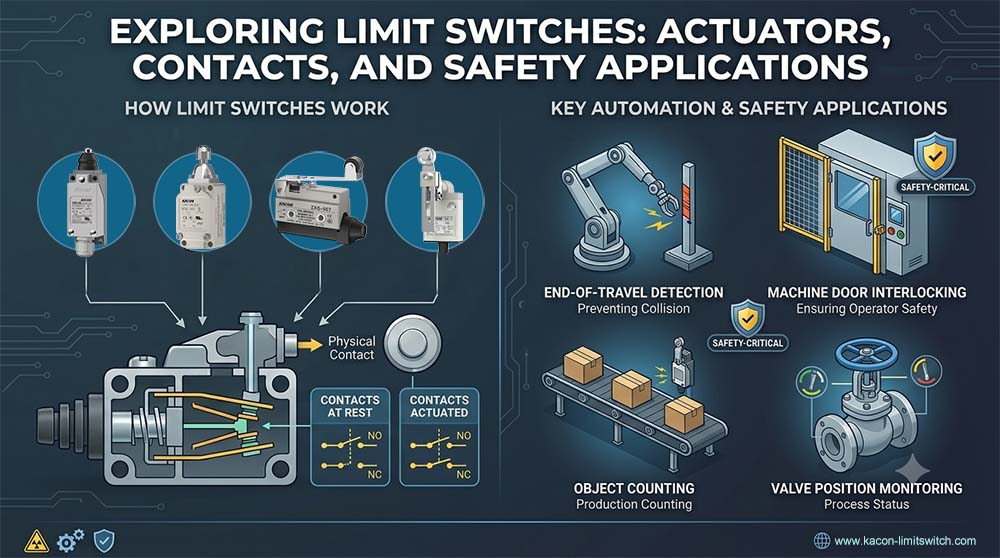
When a moving target—such as a robotic arm, conveyor pallet, or machine guard door—physically strikes the actuator lever, it compresses an internal snap-action spring mechanism. This mechanical force instantly opens or closes the internal electrical contacts.
Why Choose an Electromechanical Switch Over Solid-State Sensors?
- Absolute Determinism & Noise Immunity: Physical actuation is immune to ambient light reflections, electromagnetic interference (EMI), or metallic dust buildup, making it exceptionally reliable in harsh machining environments.
- High Load-Handling Capacity: Physical metal contacts can directly switch higher voltages and currents without the voltage drops or leakage currents associated with transistorized output sensors.
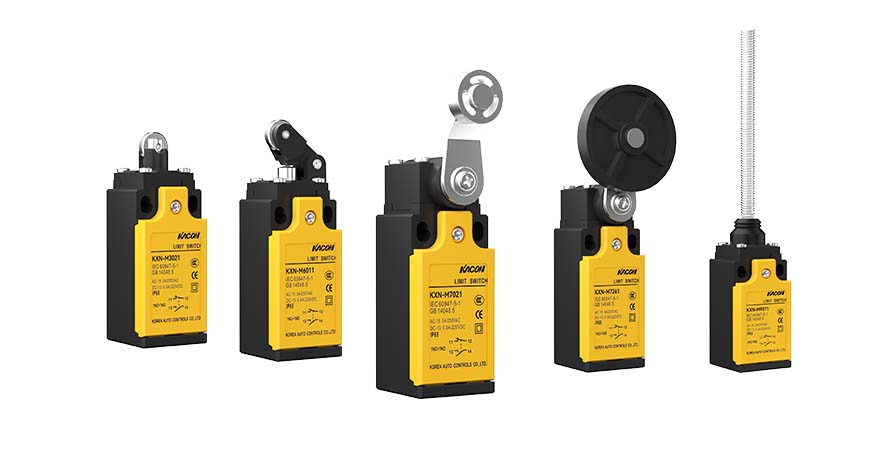
2. Contact Types: Normally Open (NO) vs. Normally Closed (NC)
When determining what type of switch a limit switch is, we must look at its internal contact logic. Most industrial limit switches feature a combination of two contact configurations:
- Normally Open (NO / Form A): The circuit is open (OFF) when the switch is at rest. It conducts electricity only when physically actuated. This configuration is typically used for sequence triggering and part presence signaling.
- Normally Closed (NC / Form B): The circuit is complete (ON) when the switch is at rest. Actuating the switch interrupts the circuit. This is the mandatory global standard for safety loops, E-Stop circuits, and overtravel limits.
The Micro-Current Challenge and Gold-Plated Precision
In modern automated factories, limit switch contacts interface directly with low-voltage PLC input cards (typically 24V DC at micro-load currents). Under low-current conditions, standard silver contacts can accumulate surface oxidation layers that insulate the contacts and prevent signal flow.
To ensure total electrical reliability compliant with IEC 60947-5-1 Low-Voltage Control Switchgear Standards, high-precision models—such as the Kacon ZXG and KXM Series—utilize 24K gold-plated contacts. Gold prevents tarnish and oxidation, ensuring stable low-resistance switching over millions of cycles.
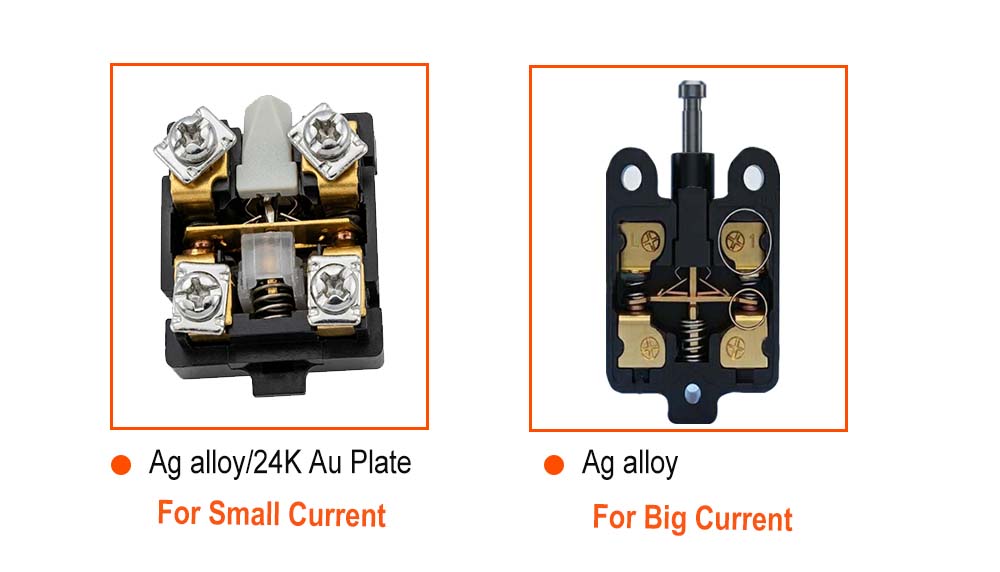
3. Choosing the Right Model: Kacon Limit Switch Series Comparison
To understand how limit switches adapt to different environments—from light-duty plastic enclosures to rugged die-cast aluminum bodies—engineers evaluate structural parameters including electrical life, contact materials, and environmental sealing ratings.
Industrial enclosures must meet recognized environmental defense metrics such as NEMA Enclosure Standards and the IEC Ingress Protection (IP) System.
The following table summarizes the technical specifications across key Kacon limit switch lines:
| Model | Contact Form | Contact Material | Rated Current (250VAC) | Life Cycle (Mech / Elec) | Protection Rating | Housing Material |
|---|---|---|---|---|---|---|
| ZXG | 1 N/O + 1 N/C | Ag alloy / 24K Au Plate | 10A | 10,000,000 / 500,000 | IP65 | Plastic |
| KXM | 1 N/O + 1 N/C | Ag alloy / 24K Au Plate | 6A | 10,000,000 / 300,000 | IP66 | Plastic |
| KXL | 1 N/O + 1 N/C | Ag alloy | 12A | 10,000,000 / 1,000,000 | IP67 | Aluminum Die-Casting |
| ELN | 1 N/O + 1 N/C | Ag alloy | 15A | 1,000,000 / 100,000 | IP65 / IP68 (Center) | Aluminum Die-Casting |
| KXN | 1 N/O + 1 N/C, 2 N/C, 2 N/C + 1 N/O, 3 N/C | Ag alloy | 10A | 10,000,000 / 300,000 | IP65 | Plastic |
4. Safety vs. Standard Limit Switches: Structural Anatomy
When a limit switch is installed for personnel safety (such as monitoring an access gate) or protecting critical assets against overtravel, it must qualify as a Safety Limit Switch.
Safety limit switches feature a positive opening (forced disconnection) mechanism. If a heavy electrical surge causes the internal contacts to micro-weld, standard return springs cannot separate them. In a safety-rated switch, the physical mechanical movement of the actuator directly forces the contact bridge apart, shearing welded contacts and guaranteeing circuit interruption in compliance with ISO 13849-1 Machine Safety Guidelines.
5. Actuator Types: Adapting to the Machine Target
A limit switch is also categorized by its actuator head—the component that physically contacts the moving machinery. Standard choices must conform to machinery design standards such as OSHA Machine Guarding Directives:
- Roller Lever: The most versatile option. A rotating wheel reduces friction and wear on the target, making it ideal for cams, slides, and rotary indexing units.
- Plunger (Push Actuator): Best suited for short, high-precision linear travel paths where machine parts strike straight down along the switch axis.
- Wobble Stick / Spring Rod: A multi-directional flexible actuator triggered from any angle, ideal for conveyor sorting or erratic target approaches.
Conclusion: The Backbone of Industrial Control
So, what type of switch is a limit switch? It is a versatile, electromechanical command device designed for position sensing and safety interlocking. From driving precise multi-step manufacturing sequences to enforcing absolute emergency shutdown loops, limit switches remain indispensable in automated control systems.
By specifying quality switches built with oxidation-free gold contacts and heavy-duty enclosures—such as Kacon’s ZXG and KXL Series—engineers ensure maximum system reliability, eliminate nuisance false trips, and maintain high plant safety standards.