
However, no technology is flawless. When designing high-speed, high-precision automated control systems, engineers must account for the physical and operational limitations of these devices.
So, what is a disadvantage of a limit switch?
Below, we examine this question through a real-world client deployment case study, followed by an in-depth breakdown of the primary drawbacks of limit switches, a comparison matrix against non-contact sensors, and how modern engineering overcomes these challenges.
1. Real-World Client Case Study: Overcoming Mechanical Wear on a High-Speed Sorting Line
A prominent packaging and sorting equipment manufacturer in Europe recently built a high-speed parcel distribution line designed to process thousands of boxes per hour.
The Engineering Challenge
The system relied on mechanical limit switches to detect the passing of parcels at high-speed diversion gates. Within the first six months of operation, the maintenance team faced a frustrating issue: mechanical wear and actuator fatigue.
- High-Impact Fatigue: Parcels struck the limit switch roller levers over 50 times per minute. The constant physical impact fatigued the internal return springs and wore down the actuator arms.
- Unscheduled Downtime: Two switches suffered mechanical fractures, while several others developed spring fatigue, causing the internal contacts to stick and fail to reset. This led to unscheduled line stoppages and expensive service dispatches.
The Kacon Solution
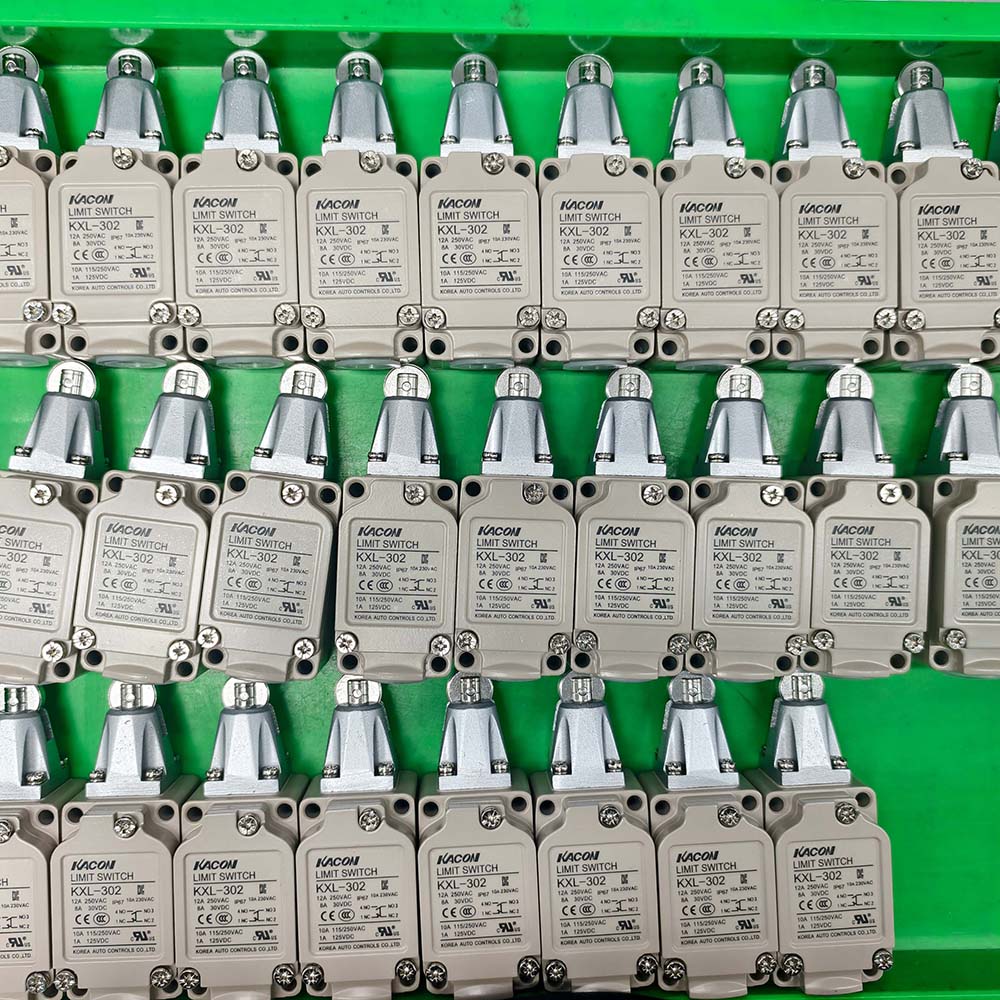
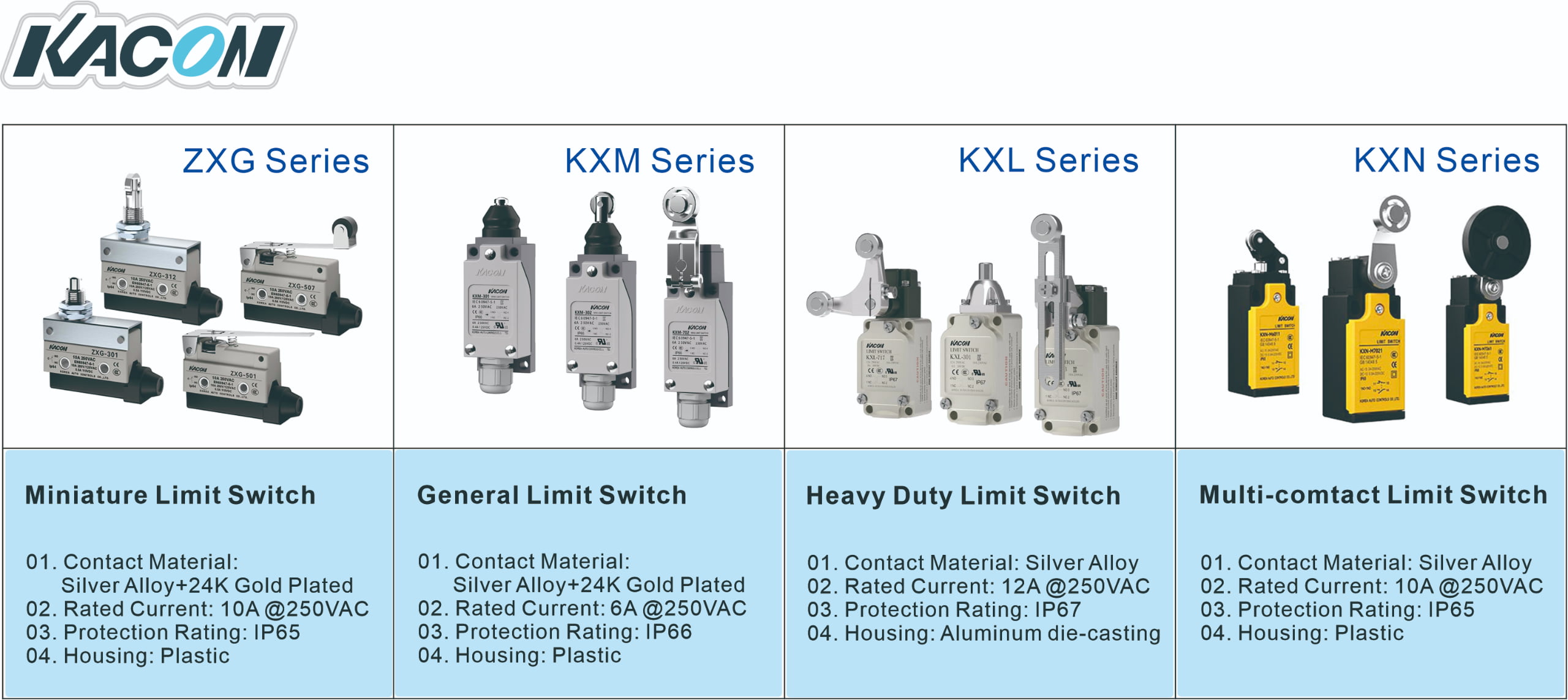
The engineering team consulted with Kacon to upgrade the vulnerable checkpoints. They replaced the standard, lightweight switches with the Kacon KXL heavy-duty limit switch series, which features an aluminum die-cast housing, rugged internal return mechanisms, and a mechanical lifespan rated for 10,000,000 operations.
Furthermore, where ultra-high-speed sliding contact made physical levers impractical, they integrated precision micro-switches backed by oxidation-proof 24K gold-plated contacts. The upgrade completely resolved the mechanical wear issues, securing smooth, uninterrupted sorting cycles.
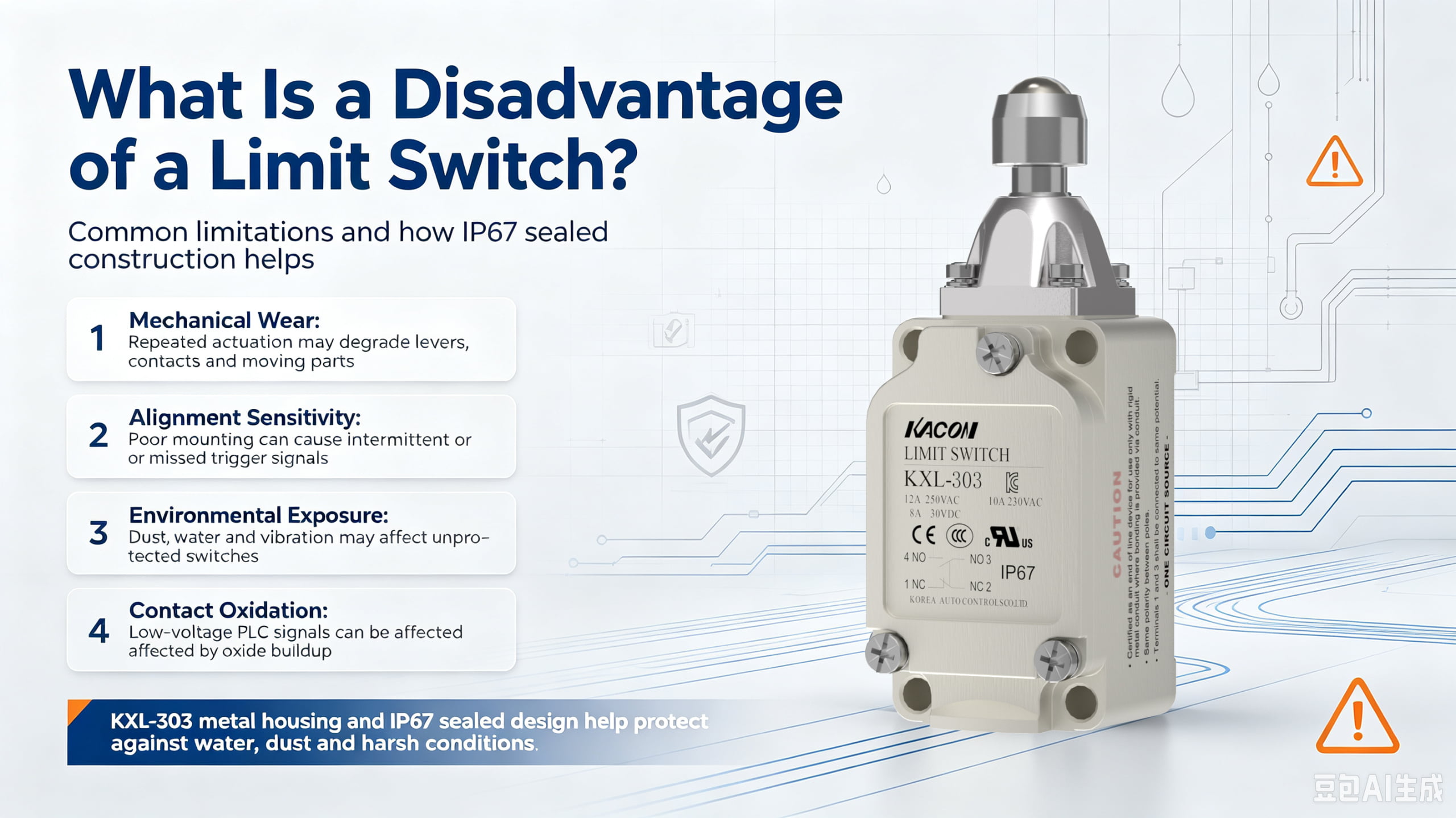
2. What Are the Primary Disadvantages of a Limit Switch?
While limit switches are indispensable, understanding their inherent disadvantages helps engineers apply them only where they excel or select upgraded variants to mitigate their weaknesses:
1. Physical Contact and Mechanical Wear
Unlike non-contact proximity sensors (such as inductive or photoelectric sensors), a limit switch requires physical contact with the moving target. Constant friction, mechanical shock, and high-frequency impacts cause internal components (springs, levers, plungers) to fatigue, wear out, or fracture over millions of cycles.
2. Response Speed Limitations
Because limit switches rely on physical mass moving against a spring-loaded mechanical actuator, they have a physical response threshold. They are ill-suited for ultra-high-speed applications—such as high-speed rotating shafts or rapid sorting lines running at thousands of cycles per minute—where physical actuators cannot reset fast enough.
3. Vulnerability to Environmental Ingress
Standard limit switches contain internal metal springs and contact points. In harsh environments without proper environmental sealing, abrasive dust, fine metal shavings, cutting fluids, or washdown water can invade the housing. This causes mechanical jamming, short circuits, or severe corrosion. Protection standards are defined under international frameworks like IEC Ingress Protection Ratings and NEMA Enclosure Standards.
4. Low-Current Contact Oxidation (The Hidden Flaw)
When limit switches interface with modern Programmable Logic Controllers (PLCs) operating on micro-loads (24V DC at under 10 mA), standard silver-alloy contacts can develop a surface oxidation film. Because low-voltage currents cannot generate a cleaning arc, oxidation acts as an insulator, leaving the switch mechanically closed but electrically open. In automated systems governed by standards like ISO 13849-1 Machine Safety Standards, signal clarity is critical to avoid false safety interlock faults.
3. Limit Switch vs. Non-Contact Proximity Sensor Comparison
To help control designers evaluate whether an electromechanical switch or a solid-state sensor is best suited for an application, review this comparison matrix:
| Evaluation Metric | Electromechanical Limit Switch | Non-Contact Proximity Sensor (Inductive/Capacitive) |
|---|---|---|
| Physical Contact | Required. Must physically contact the target object. | None. Detects targets via electromagnetic or electrostatic fields. |
| Mechanical Lifespan | Limited by physical wear (typically 1 to 10 million operations). | Virtually infinite (no moving mechanical parts). |
| Signal Nature | True dry-contact discrete switching; ideal for safety interlock loops. | Solid-state output (NPN/PNP); may exhibit minor leakage current. |
| Harsh Environment Tolerance | Excellent when properly sealed in rugged housings (e.g., Kacon KXL IP67). | Can be affected by heavy metal debris buildup, oil buildup, or EMI noise. |
| Primary Disadvantage | Mechanical wear over time; actuation speed limitations. | Cannot be used for direct hard-wired high-current safety E-Stop loops. |
4. Engineering Solutions: How Kacon Overcomes Traditional Disadvantages
Modern industrial hardware bridges the gap between traditional mechanical limitations and demanding automation specs:
- Combating Mechanical Wear: High-strength aluminum die-cast enclosures and heat-treated internal mechanisms (featured in the Kacon KXL series) deliver high-impact shock resistance and a 10,000,000-cycle mechanical lifespan.
- Eliminating Micro-Load Oxidation: Integrating Ag alloy / 24K Au Plate contacts into precision switches (such as the Kacon ZXG and KXM series) prevents oxidation buildup, securing zero-resistance signal transmission for 24V PLC inputs. Testing procedures can be verified using industry references like Fluke’s Electrical Continuity Testing Guide.
- Preventing Ingress Failures: Fully gasketed housings compliant with OSHA Machine Guarding Standards protect internal contact blocks from water, oil, and dust intrusion.
Conclusion: Balancing Pros and Cons for Optimal System Design
So, what is a disadvantage of a limit switch? Its primary drawbacks stem directly from its mechanical nature: physical wear from continuous contact, operational speed thresholds, and susceptibility to harsh environments or surface oxidation.
By recognizing these limitations and selecting rugged, precision-engineered hardware from Kacon, engineers can harness the unmatched safety and physical simplicity of limit switches while successfully eliminating their traditional drawbacks.
External Technical References & Standards
For additional technical documentation on industrial switching, safety compliance, and enclosure protection ratings, explore these industry resources:
- IEC International Electrotechnical Commission – Ingress Protection Guidelines
- ISO 13849-1 Machine Safety Guidelines for Control Systems
- NEMA 250 Standards for Electrical Equipment Enclosures
- OSHA General Industry Machinery & Machine Guarding Regulations
- Fluke Technical Resource: Testing Electrical Continuity with Multimeters