
But why would a limit switch be open?
To troubleshoot the issue efficiently, maintenance engineers must first determine if the switch is open on purpose (due to its default contact configuration and machine position) or if it is open due to a mechanical or electrical failure. Below are the four primary reasons a limit switch would be in an open state, along with targeted diagnostic steps and preventive upgrades.
1. Normal Mechanical State (Normally Open Wiring)
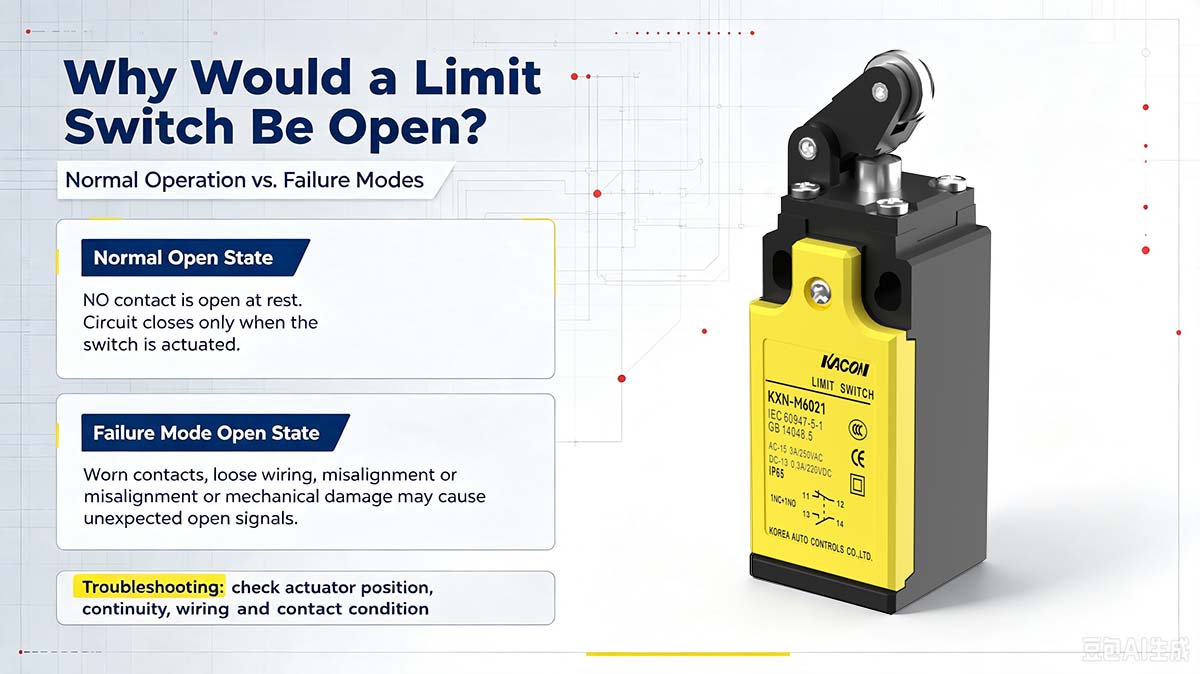
The most common reason a limit switch is open is simply that it is designed to remain open when the machine is in its resting or default position.
If the limit switch is wired using Normally Open (NO) terminals (standardized as Terminals 13 and 14 under international switchgear conventions like IEC 60947-5-1), the internal contacts are physically separated by default.
- Why it is open: The machine or target object has not yet actuated the switch mechanism.
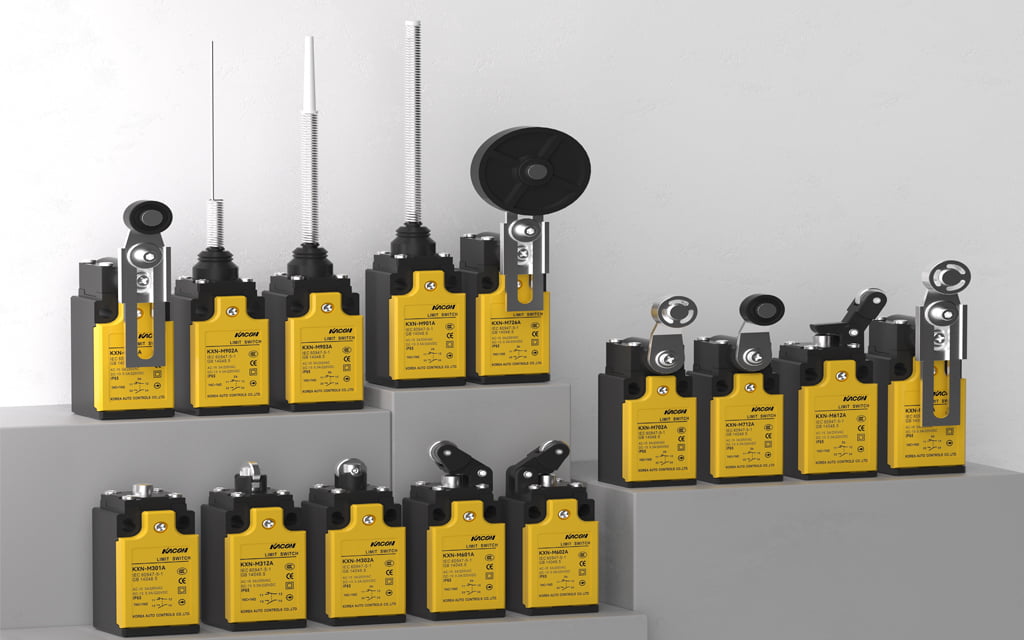
- When it will close: The circuit completes only when the actuator (such as a roller lever, plunger, or wobble stick) is physically depressed by a moving component, transmitting a momentary “start,” “count,” or “position reached” signal to the PLC.
2. Safety Interlock Triggered (Normally Closed Wiring)
If a limit switch is wired into a machine safety circuit, it utilizes Normally Closed (NC) terminals (standardized as Terminals 11 and 12). In this configuration, the switch remains closed (conducting electricity) during normal, safe machine operation.
If an NC safety switch is suddenly open, it indicates that a fail-safe mechanism has been triggered:
- Why it is open: A safety guard door has been opened, an emergency stop bumper was engaged, or a CNC axis overtraveled and physically compressed the safety limit switch.
- The Result: The physical impact forces the internal contact bridge apart, cutting the 24V signal to the safety relay and instantly de-energizing hazardous machinery. This fail-safe behavior complies with industrial machine safety standards such as OSHA Machine Guarding Standards and functional safety guidelines outlined in ISO 13849-1.
3. Mechanical Damage (Unintentional Open Circuit)
If a Normally Closed (NC) limit switch reports an open state while the machine is sitting in a safe resting position, you are dealing with a physical hardware failure. Harsh operating conditions can damage standard limit switch components over time:
- Actuator Damage: A roller lever arm snaps off due to mechanical impact, or an operating plunger becomes permanently jammed inward by debris, metal shavings, or dried coolant.
- Broken Internal Spring: The internal return spring suffers metal fatigue and snaps. Even after the mechanical cam moves away, the contact block remains stuck in the open position.
The Solution: Harsh industrial environments require rugged hardware upgrades. Heavy-duty switches, such as the Kacon KXL Series, feature die-cast aluminum housings, an IP67 waterproof/dustproof rating, and a mechanical lifespan exceeding 10,000,000 operations, preventing physical breakage from causing unexpected open-circuit failures. Verify enclosure suitability against established NEMA Enclosure Standards.
4. The “False Open” Hazard (Contact Oxidation on Micro-Loads)
A puzzling fault occurs when the limit switch appears physically undamaged, the lever clicks normally, and the return springs operate smoothly—yet the PLC diagnostic screen still reports an “Open” state. This condition is known as a False Open fault caused by contact oxidation.
Why Micro-Load Circuits Suffer from Contact Oxidation
Modern automated control systems connect field limit switches directly to low-voltage PLC input channels (typically 24V DC operating at micro-current levels below 10 mA):
- Standard silver-alloy limit switch contacts naturally form a microscopic oxide or tarnish film on their surfaces when exposed to air and moisture.
- On high-voltage power circuits, an electrical arc pierces this oxide layer upon contact closure.
- Because 24V DC micro-load PLC signals lack the energy needed to burn off oxidation, the film acts as an electrical insulator.
- Even though the silver contacts are physically touching, current flow is blocked. The PLC interprets this high contact resistance ($\ge 100\,\Omega$) as an open circuit (0V DC).
Preventing False Opens with Kacon 24K Gold-Plated Contacts
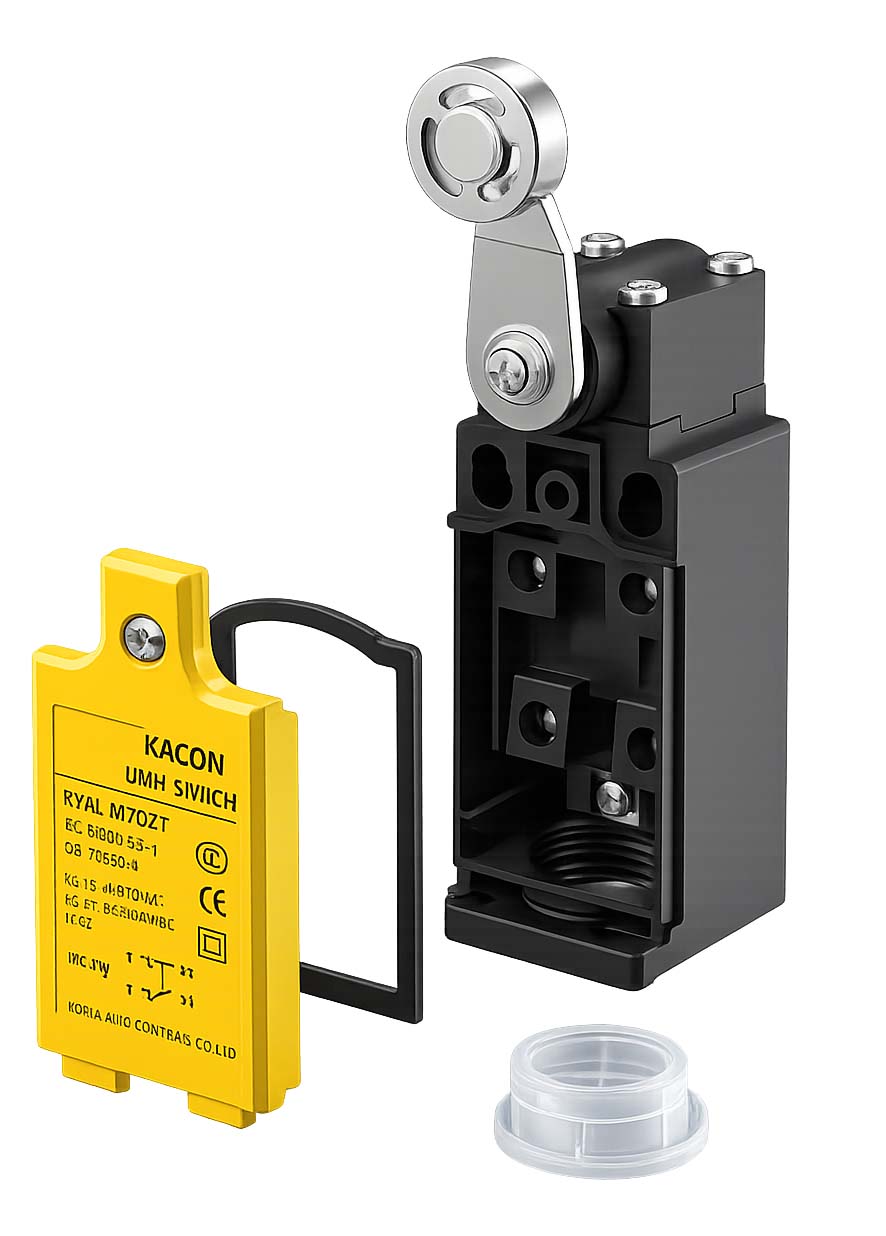
To eliminate false open readings on low-voltage automation loops, Kacon equips its high-precision limit switches—such as the ZXG and KXM series—with Ag alloy / 24K Au Plate (gold-plated) contacts.
Because gold is chemically inert, it does not form oxide or sulfide films. Kacon gold-plated contact blocks maintain ultra-low contact resistance ($\le 25\text{ m}\Omega$ to $50\text{ m}\Omega$), ensuring immediate, reliable 24V DC signal transmission on every mechanical cycle. For testing techniques, consult Fluke’s Guide to Electrical Continuity Testing.
Summary Troubleshooting & Diagnostic Matrix
Use this reference table to systematically diagnose why a limit switch is in an open state and select the appropriate corrective action:
| State of Machine / Actuator | Wiring Configuration | Root Cause of Open Circuit | Required Action |
|---|---|---|---|
| Machine resting / Target absent | Normally Open (NO) (Terminals 13/14) |
Normal resting state. Switch is waiting for target actuation. | None required (intended operation). |
| Safety guard open / Axis overtraveled | Normally Closed (NC) (Terminals 11/12) |
Normal safety function engaged. Circuit opened to stop machine. | Clear mechanical hazard, close guard door, and reset safety controller. |
| Machine safe / Target absent | Normally Closed (NC) (Terminals 11/12) |
Mechanical Jam / Damage. Actuator or plunger is stuck in depressed state. | Clean or unjam switch head; replace damaged units with IP67-rated Kacon KXL Series. |
| Switch clicks mechanically, but PLC reads 0V DC | Normally Closed (NC) (Terminals 11/12) |
False Open Fault (Oxidation). Silver contacts oxidized, blocking 24V DC micro-current. | Upgrade contact block to Kacon ZXG / KXM Series with 24K Gold-Plated contacts. |
Conclusion: Distinguishing Intended vs. Fault Open States
Understanding why a limit switch is open is essential for effective electrical troubleshooting in industrial environments. An open reading could indicate a switch waiting for a target (NO), a safety loop interrupting power during a guard trip (NC), or an unintended failure caused by mechanical damage or silver contact oxidation.
By identifying these root causes and specifying micro-load-optimized hardware—such as Kacon gold-plated, heavy-duty limit switches—automation engineers can eliminate false open signals, optimize diagnostic accuracy, and maintain high production uptime.
External Technical References & Standards
For additional details regarding industrial wiring standards, safety interlocks, and testing procedures, review the following technical resources:
- OSHA General Industry Safety Standards – Machine Guarding
- IEC 60947-5-1 Low-Voltage Switchgear and Controlgear Specifications
- ISO 13849-1 Safety of Machinery – Safety-Related Parts of Control Systems
- Fluke Technical Guide: Testing Electrical Continuity with Digital Multimeters
- NEMA 250 Specification for Electrical Equipment Enclosures